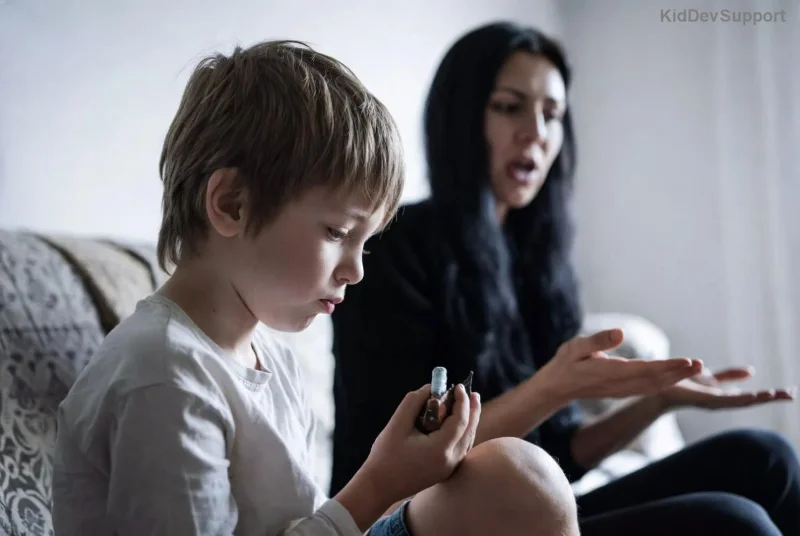
Imagine trying to measure the vastness of the ocean with a single ruler. That's the common misconception surrounding the autism spectrum. Far from a straight line from "mild" to "severe," Autism Spectrum Disorder (ASD) is a rich, multidimensional tapestry of traits, strengths, and challenges. This article dives deep into why the autism spectrum defies linear thinking, empowering you with accurate, up-to-date knowledge to better understand and support autistic individuals. 🩺

The Myth of the Linear Autism Spectrum
Historically, people visualized the autism spectrum as a sliding scale: low-functioning at one end, high-functioning at the other. This oversimplification ignores the reality. Recent diagnostic frameworks, like those from leading health organizations, emphasize that ASD encompasses varying intensities across multiple domains. No two autistic people are alike, and "high-functioning" doesn't mean "less autistic."
Think of it as a radar chart with spokes for social communication, repetitive behaviors, sensory processing, and more. Someone might excel in one area while struggling intensely in another. This multidimensional autism model is the newest standard, promoting personalized support over outdated labels.
Key Dimensions of the Autism Spectrum
Autism Spectrum Disorder is defined by two core criteria: persistent challenges in social communication and restricted, repetitive patterns of behavior. But within these, traits vary widely. Here's a breakdown:
- Social Communication: Ranges from subtle nonverbal cues missed to complete nonverbal expression. Some thrive in structured interactions; others find eye contact overwhelming.
- Repetitive Behaviors and Interests: From intense focus on niche topics (a strength in fields like tech) to rigid routines that provide comfort.
- Sensory Processing: Hypersensitivity to lights/sounds or hyposensitivity seeking intense stimuli – affecting up to 90% of autistic individuals per recent studies.
- Cognitive and Language Variability: Gifted intellect alongside language delays, or uneven profiles like strong visual-spatial skills but math challenges.
- Emotional Regulation: Meltdowns from overload versus exceptional empathy in one-on-one settings.
This variability explains why the autism spectrum isn't linear. A table illustrates common profiles:
| Domain |
Low Intensity Example |
High Intensity Example |
Potential Strength |
| Social |
Prefers small groups |
Avoids all interaction |
Deep loyalty in relationships |
| Repetitive |
Mild routines |
Intense stimming |
Hyperfocus for expertise |
| Sensory |
Mild noise aversion |
Overwhelmed by tags |
Heightened creativity |
| Cognitive |
Even skills |
Savant abilities |
Innovation in STEM |
![Diverse profiles on the autism spectrum radar chart]()
Diagnostic Shifts: Embracing the Non-Linear View
The latest diagnostic manuals have unified conditions like Asperger's under Autism Spectrum Disorder, removing levels 1-3 that implied a hierarchy. Instead, clinicians assess support needs across domains using tools like the ADOS-2. This shift highlights that functionality depends on environment – a "high-functioning" person in a supportive setting might mask exhaustion, leading to burnout.
For parents and educators: Look beyond IQ. Recent research shows autistic adults often face higher unemployment not due to ability, but mismatched environments. Tailored interventions, like sensory-friendly classrooms, make the difference. 💡
Real-Life Implications: Profiles Beyond the Line
Meet Alex: Excels in coding marathons (autism strength) but sensory overload causes shutdowns. Or Jordan: Nonverbal yet communicates profoundly via art. These stories shatter the linear myth.
Challenges include co-occurring conditions like anxiety (common in 40%+) or ADHD. Strengths? Pattern recognition, loyalty, innovative thinking – fueling successes in Silicon Valley and arts.
To thrive:
- Customize environments: Noise-cancelling tools, visual schedules.
- Leverage strengths: Special interests into careers.
- Seek neurodiversity-affirming therapy: Focus on accommodation, not "cure."
Curious about assessment? Consult professionals via resources like the CDC's autism page or Autism Speaks.
![Autistic individual thriving with personalized support]()
Why This Matters: Empowering the Autism Spectrum Community
Understanding the autism spectrum as non-linear fosters inclusion. It debunks myths, reduces stigma, and guides effective support. Parents: Early intervention boosts outcomes. Autistic adults: Self-advocacy unlocks potential. Educators: Differentiated teaching transforms classrooms.
Recent data shows neurodiversity acceptance rising, with workplaces adopting hiring practices celebrating ASD traits. The future? A world where the spectrum's full colors shine. 🌟
FAQs: Demystifying the Autism Spectrum
Is autism a disease? No, it's a neurotype.
Can autistic people be successful? Absolutely – think Temple Grandin or Elon Musk.
How to support someone on the spectrum? Listen, accommodate, celebrate differences.
Ready to dive deeper? Share your experiences below or explore personalized strategies in our next guide on sensory supports.