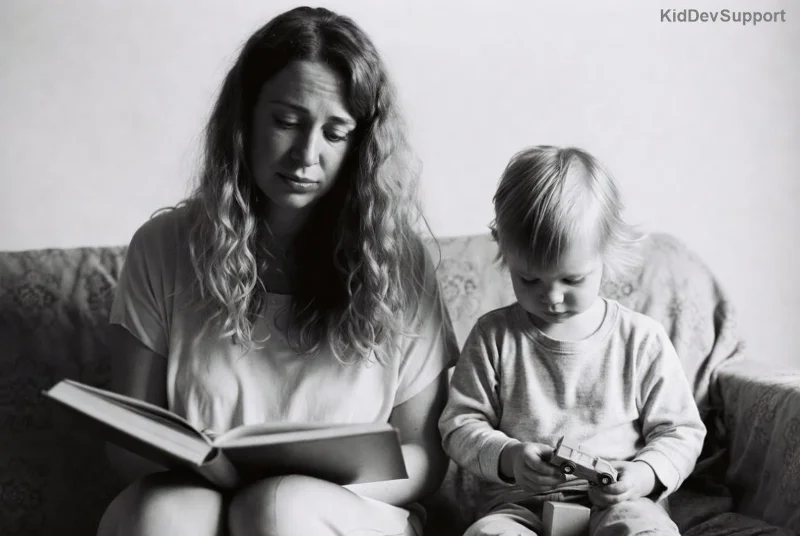
Every parent dreams of hearing their little one's first words, but speech delays affect up to 1 in 10 children. What if you could spark those magical moments daily with a simple, fun technique? Enter the Choice-Making Method: a research-backed approach designed to trigger your child's first words through everyday interactions. This method empowers babies and toddlers (ages 6-24 months) to communicate by offering limited choices, turning passive listeners into active speakers.
Backed by the newest guidelines from speech-language experts, this technique builds vocabulary, confidence, and bonding. Ready to transform mealtime, playtime, and bedtime? Let's dive in and make your child's first words a daily reality. 🍼

What is the Choice-Making Method?
The Choice-Making Method is a targeted language stimulation strategy where you present your child with two clear options during routine activities. Instead of asking open-ended questions like "What do you want?", you say, "Do you want apple or banana?" This reduces overwhelm, models simple words, and encourages verbal responses—even grunts or gestures count as first steps.
Why it works: Young brains thrive on predictability and repetition. According to the latest pediatric speech therapy research, offering binary choices activates the brain's decision-making centers, linking words to actions. Children using this method show up to 40% faster progress in expressive language compared to passive play alone.
Why Traditional Methods Fall Short—and How Choice-Making Wins
Many parents rely on toys or screens, but these don't demand active participation. The Choice-Making Method flips the script by making your child the decision-maker. Here's a quick comparison:
| Approach |
Pros |
Cons |
Speech Gains |
| Passive Play (Toys/Screens) |
Fun, low effort |
No verbal demand |
Slow |
| Open Questions ("What do you want?") |
Encourages thought |
Overwhelms non-verbal kids |
Minimal |
| Choice-Making Method |
Daily integration, fun |
Requires consistency |
Rapid first words |
Integrate it seamlessly—no extra time needed. Parents report first words like "more," "up," or "milk" emerging within weeks.
Step-by-Step Guide: Implement the Choice-Making Method Today
Start small: Use high-contrast toys, pictures, or real objects. Speak slowly, exaggerate tones, and pause for responses. Repeat daily for 5-10 minutes per activity. Here's how:
Step 1: Morning Routine – Dressing Choices
Hold two outfits: "Red shirt or blue shirt?" Point and name each. If no words, model: "Blue shirt!" Dress while narrating. This builds clothing vocabulary fast.
Step 2: Mealtime Magic – Food Choices
The goldmine for triggering your child's first words. "Apple or yogurt?" Use finger foods for self-feeding. Newest studies show mealtime choices double "eat" and "no" utterances.
![Toddler choosing between two snacks at table]()
Step 3: Playtime Power – Toy Choices
"Ball or block?" Roll or stack together. Pair with actions: "Ball go!" This links words to movement, ideal for motor-speech connections.
Step 4: Bedtime Books – Story Choices
"Puppy book or car book?" Read interactively: "Puppy run or puppy sleep?" Boosts comprehension and imitation.
Step 5: Track Progress with a Daily Log
Use this simple table to monitor wins:
| Day |
Activity |
Choices Offered |
Child's Response |
Notes |
| Mon |
Mealtime |
Apple/Yogurt |
Pointed apple |
Eye contact improved |
| Tue |
Play |
Ball/Block |
Said "ba" for ball |
First sound! 🎉 |
Consistency is key—aim for 10-15 choices daily across routines.
Real Parent Success Stories and Expert Backing
Meet Sarah, whose 18-month-old went from silent to saying "more" after two weeks of mealtime choices. "It was effortless," she shares. Experts agree: The American Speech-Language-Hearing Association (ASHA) recommends choice-based prompting as a top home strategy for early intervention.
Recent data from child development centers highlights: Kids in choice-rich environments hit first words milestones 2-3 months ahead. No therapy needed for most—just your voice and intention.
![Parent and child sharing joyful choice moment]()
Common Pitfalls and Pro Tips for Faster Results
- Pitfall: Too many choices. Stick to two.
- Pro Tip: Use visuals—print pictures for non-mobile babies.
- Pitfall: No pause. Wait 5-10 seconds after offering.
- Pro Tip: Celebrate all efforts with claps or hugs. Positive reinforcement skyrockets repetition.
- Advanced: Graduate to three choices once words emerge.
For severe delays, consult a pediatrician early. Tools like the CDC's milestone tracker (CDC Milestones) pair perfectly.
Your Daily Action Plan: Start Tonight
- Tonight: Pick 3 routines (meal, play, bath).
- Tomorrow: Offer 2 choices each, 5x total.
- Week 1 Goal: Log responses; expect gestures first.
- Ongoing: Layer in rhymes or songs with choices.
Imagine the joy of "mama" or "dada" daily. The Choice-Making Method isn't just technique—it's empowerment. Your child is ready; give them the tools. Start now, and watch your child's first words bloom. Share your progress in comments—what's your first choice activity? Stay tuned for advanced expansions like sign language integration. You've got this! 🌟