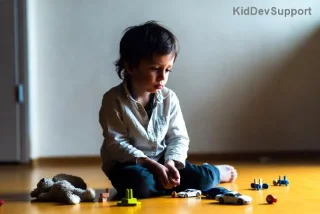
Every parent feels that knot in their stomach when their toddler isn't babbling, pointing, or chatting like others. Is it just a harmless speech delay, or could it signal autism? With rising awareness, distinguishing between the two has never been more critical. This guide dives straight into the autism vs speech delay debate, arming you with clear, actionable insights from the latest pediatric research. Keep reading to uncover the red flags, expert-backed comparisons, and steps to get your child the right support—potentially transforming their future. 👨⚕️

What Exactly is a Speech Delay?
A speech delay occurs when a child lags behind typical language milestones without other developmental concerns. By age 2, most kids say 50+ words and form two-word phrases. If yours isn't there yet, it might be a speech delay.
Common causes include hearing issues, bilingual households, or temporary setbacks like frequent ear infections. The good news? Isolated speech delays often resolve with targeted therapy. Recent studies emphasize that 50-70% of these children catch up fully by school age with early help.
- Typical signs: No words by 18 months, limited vocabulary, but strong eye contact and social play.
- Response to intervention: Rapid improvement with speech therapy.
Unpacking Autism Spectrum Disorder (ASD)
Autism, or Autism Spectrum Disorder, is a neurodevelopmental condition affecting communication, social interaction, and behavior. Language delays are common in ASD—up to 30% of children with autism remain minimally verbal—but they're just one piece of a bigger puzzle.
The latest diagnostic criteria highlight a spectrum: from high-functioning individuals to those needing substantial support. Core traits include repetitive behaviors, sensory sensitivities, and challenges reading social cues, beyond mere speech issues.
Autism vs Speech Delay: Spot the Key Differences
Here's where confusion peaks. Both can look like "late talkers," but dig deeper. Use this comparison table to evaluate your child's profile objectively.
| Feature |
Speech Delay |
Autism |
| Eye Contact |
Consistent and engaged |
Avoids or fleeting |
| Social Interaction |
Plays with peers, responds to name |
Prefers solo play, no pointing/sharing |
| Repetitive Behaviors |
Rare |
Hand-flapping, lining up toys common |
| Gestures |
Uses pointing, waving early |
Limited or absent |
| Response to Therapy |
Quick gains in language |
Broader therapies needed (ABA, OT) |
This table, drawn from the newest pediatric guidelines, shows autism involves holistic delays—not just speech. If multiple columns align with ASD, don't delay evaluation.
![Toddler during speech therapy session]()
Red Flags: When Speech Delay Might Actually Be Autism
Beyond the table, watch for these clusters by age 2:
- No babbling or gesturing by 12 months.
- Lack of pretend play or imitation.
- Sensory overload: Extreme reactions to sounds/textures.
- Regression: Losing acquired words/skills.
Recent data reveals 1 in 36 children has ASD, with boys 4x more likely. Early signs often appear before age 2, but speech lags can mask them until 3.
When Should You Consult a Professional? 👨⚕️
Act now if your child misses milestones. Start with your pediatrician for screenings like M-CHAT (Modified Checklist for Autism in Toddlers). They may refer to:
- Speech-language pathologist for delays.
- Developmental pediatrician or neurologist for ASD evaluation.
- Early intervention programs—free in many regions for under-3s.
For reliable tools, check the CDC's Act Early resources or Autism Speaks toolkits.
Early Intervention: The Game-Changer for Both Conditions
Time is brain. The latest research shows intervention before age 3 boosts outcomes by 50%+. For speech delay, therapies like Hanen or PROMPT accelerate talking. For autism, ABA, speech therapy, and occupational therapy build skills holistically.
Parents report huge wins: "My late talker is now chatting non-stop after 6 months!" Success stories abound, but starting early is key. Wondering about home tips? Try narrating daily routines, reading interactively, and limiting screens.
![Happy child achieving speech milestone with family]()
Frequently Asked Questions (FAQs)
Can a child have both autism and speech delay?
Yes—many with ASD have co-occurring speech issues, but not all speech-delayed kids have autism.
Is late talking always autism?
No. Family history of late bloomers or environmental factors often explain isolated cases.
How accurate are online autism quizzes?
Helpful starters, but professional diagnosis is essential.
Final Thoughts: Empower Your Child's Future
Differentiating autism vs speech delay empowers parents to act decisively. Whether it's targeted therapy or comprehensive support, early steps lead to thriving kids. Track milestones, trust your instincts, and consult pros today. Your vigilance could be the difference-maker. Share your story below—what signs prompted your check-up? For more on child development, bookmark us and stay tuned. 😊