Autistic Child and Halloween Doorbells: How to Prepare a Quiet-Space Plan
Illustrative example: Imagine that Maya’s 8-year-old, Eli, likes Halloween decorations but finds the sudden doorbell and excited voices hard to predict. This is a made-up example, not a testimonial or a tested outcome. It shows how a family can plan around one child’s known needs while keeping participation optional.
A quiet-space plan does not have to turn Halloween into a treatment exercise or keep a child away from a celebration. It gives the child a familiar, low-demand place to go before, during, or after a doorbell rings. For Eli, the goal might be hearing fewer sudden sounds and knowing what happens next. Another child may want to answer the door, wear headphones, stay with a sibling, or skip Halloween altogether. Ask the child what feels helpful and use supports that have worked for them before.
Autistic people can have different sensory experiences; loud sound, bright light, crowds, and changes in routine may be difficult for some, while others may enjoy them. A plan should follow this child’s signals rather than assumptions about autism. The National Autistic Society’s sensory guidance recommends identifying individual triggers, reducing what can be changed, offering a safe space, and explaining what to expect.
1. Map the Halloween sounds and choices
Start several days ahead, at a calm time. Together, list what may happen at your home: the doorbell or knocking, voices on the porch, a door opening, decorations that move or make noise, lights, costumes, and a change to the usual evening routine. Ask which sounds or moments bother the child, which are okay, and what they would like to do. They can answer with speech, pointing, a drawing, a communication device, or another familiar method.
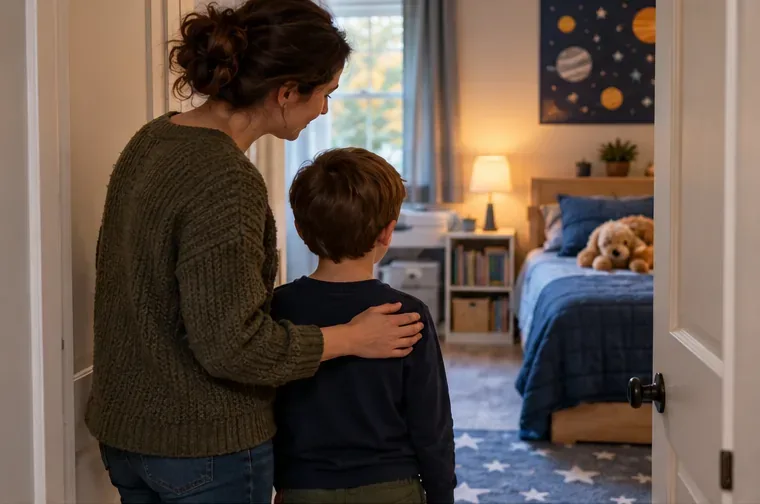
A caregiver and child look into a bedroom chosen as a quieter place away from the front door.
Maya might notice that Eli is comfortable with a pumpkin on the porch but dislikes the chime and seeing costumed visitors through the glass. That observation leads to practical changes: an adult handles the door, the child chooses a room away from the entry, and the family does not expect him to greet anyone. If the child cannot yet describe a preference, use what you already know and watch for their cues; do not deliberately expose them to a loud surprise to “test” them.
Choose a simple signal for “I need the quiet room” if the child can use one: a card, gesture, spoken phrase, or message on their device. Let them know that using it does not require an explanation. Keep choices small and real—such as “quiet room or living room?”—rather than asking a distressed child to make many decisions.
2. Set up a quiet place that is safe and familiar
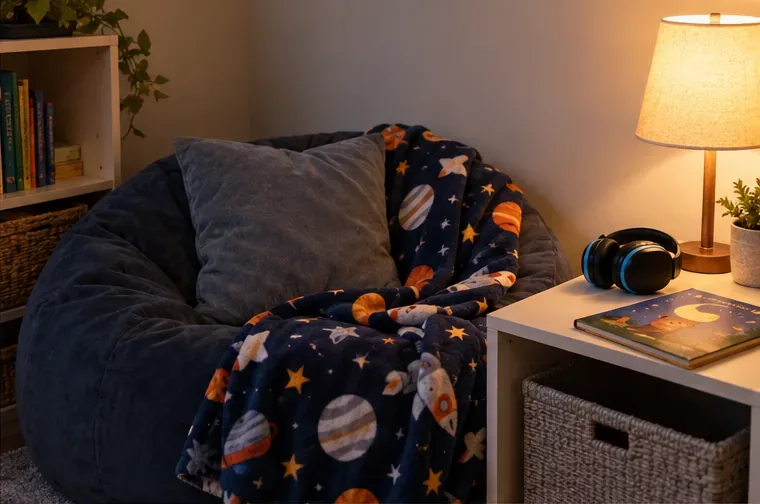
Pick the calmest practical spot, ideally away from the front door and windows where visitors gather. It might be a bedroom, den, or a corner that the child already likes. The space does not need special equipment. Familiar objects often matter more than new purchases: a favorite book, pillow, soft light, fidget item, or activity the child chooses. Keep walkways clear, and make sure the child can leave and reach a trusted adult. A quiet room should not be locked or used as a punishment.
A soft chair, familiar blanket, book, lamp, and headphones are arranged in a calm corner.
Reduce sounds and sights you can control. If it suits the household, turn off a doorbell chime or ask visitors to knock softly; post a polite note by the bell; close a hallway door; and keep television or music low. An adult can answer the door so the child does not have to. Confirm that any change will not interfere with household safety devices or a needed alert. If the doorbell must stay on, consider a familiar, child-approved alternative such as headphones or ear defenders kept within reach. Do not insist that the child wear them, and make sure they can still communicate with a caregiver.
Include the child in arranging the space. A lamp that feels soothing to one child may be too bright for another; silence may feel comfortable, or familiar quiet music may work better. Avoid introducing unfamiliar sensory tools on Halloween night. The National Autistic Society notes that sensory tools and safe spaces should match the individual, and that a person may need time and space to recover.
3. Show the plan before the evening begins
Make the plan understandable in the child’s preferred format. That might be a short written list, photos, a few drawings, or a brief spoken preview. Keep it accurate and include what will happen if plans change. For instance: “After dinner, the doorbell may ring. Mom will answer. You can stay in your room, come out if you want, or ask for help. When trick-or-treating ends, we will follow the usual bedtime routine.” Do not promise that no one will ring unless you can ensure it.
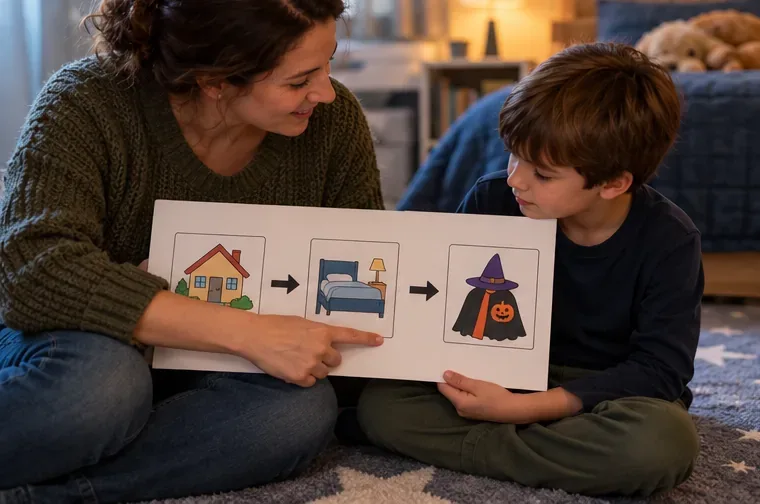
A caregiver and child review a picture sequence showing home, a quiet room, and a costume activity.
Maya could show Eli three picture cards: home, quiet room, and optional costume or treat activity. She can explain that the doorbell may happen more than once and that he can choose whether to join. A simple sequence makes the plan visible without requiring him to remember a long verbal explanation. The CDC describes visual routines as one way educational approaches can support consistency, and says written or drawn routines can be placed in view. This is a planning aid, not a guarantee that a child will feel calm.
Practice only if the child wants to. You might point to the quiet-room sign and walk there together, or have a trusted adult make a gentle pretend knock in daylight. Give advance notice and stop if the child shows discomfort. Rehearsal is optional; a preview, a clear exit option, or no Halloween participation may be a better fit. The American Academy of Pediatrics’ parent resource also advises discussing Halloween in advance and accepting when a young child does not want to participate; see HealthyChildren.org’s Halloween tips.
4. Assign roles and follow the child’s lead
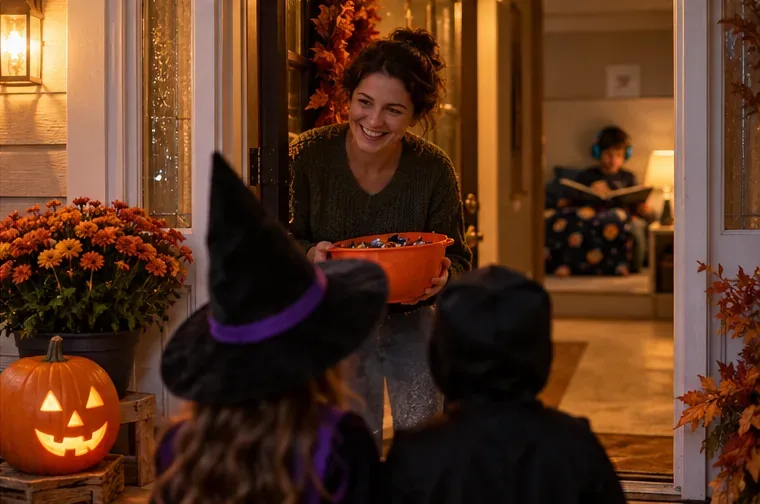
Before visitors arrive, agree who answers the door, who stays available to the child, and how the child can get help. If one caregiver is managing both tasks, decide in advance where the child will be and how you will check in without crowding them. Tell siblings what the plan is in simple, respectful terms: their sibling may use the quiet room, and nobody should call them out or bring visitors to the doorway.
A caregiver greets trick-or-treaters while a child reads in a quiet room behind her.
During the evening, keep directions brief and calm. If Eli goes to the quiet room, Maya can acknowledge the choice and avoid repeatedly asking him to return. A child might cover their ears, stop speaking, move away, become very still, pace, or show other signs that they have had enough. These cues vary and are not a checklist for diagnosis. If distress rises, reduce noise and light where possible, give space, and use the child’s known communication and calming supports. Avoid touching or demanding an answer unless safety requires it. The National Autistic Society suggests reducing triggers, moving to a quieter place, reassuring the person, and allowing recovery time; see its guide to meltdowns. Leicestershire Partnership NHS Trust likewise advises agreeing an individual plan when the person is calm and creating a quiet, safe space when possible (NHS guidance on meltdowns and shutdowns).
A short checklist for the day
The child knows what sounds or visitors may happen and what choices are available.
A familiar quiet place is ready, with an easy route to a trusted adult.
Any headphones, communication tools, or comfort items are available if the child wants them.
An adult is assigned to answer the door; siblings know not to pressure the child.
The plan includes a way to stop, leave, or skip the activity without penalty.
The family can return to a familiar after-Halloween routine when the child is ready.
How to tell whether the plan helped
Judge success by whether the child had access to a safe option, could communicate or signal a need as best they could, and had time to recover—not by whether they stayed in the room, wore a costume, greeted visitors, or avoided every sign of distress. A plan can be useful even if the child chooses not to take part. Afterward, when everyone is calm, ask what helped and what should change next time. Note patterns without treating one difficult evening as failure.
A quiet-space plan cannot control every visitor, sound, or unexpected event, and it is not a substitute for individualized professional support. If sensory distress is frequent or affects everyday life, consider discussing it with the child’s pediatrician or occupational therapist. For immediate safety concerns, follow the child’s existing care or emergency plan. The most useful Halloween arrangement is the one that respects the child’s communication, preferences, and right to opt out.