Autumn School Trip: A Sensory Checklist to Share With Your Autistic Child’s Teacher
A field trip changes more than the classroom
An autumn field trip can bring a bus ride, a different route, crowds, new sounds, bright or changing light, unfamiliar smells, weather layers, and a schedule that shifts during the day. A child may be excited about the destination and still need help with one or more of those changes. Families and teachers can reduce avoidable surprises by sharing a short, specific sensory plan before the trip.
The aim is not to predict every reaction or make the day perfectly quiet. It is to ask what the child already finds helpful, identify the parts of the trip that are still unknown, and agree on what adults will do if the plan needs to change. Invite the child into the conversation in a way that suits their age and communication style. Their interests and preferences belong in the plan alongside support needs.
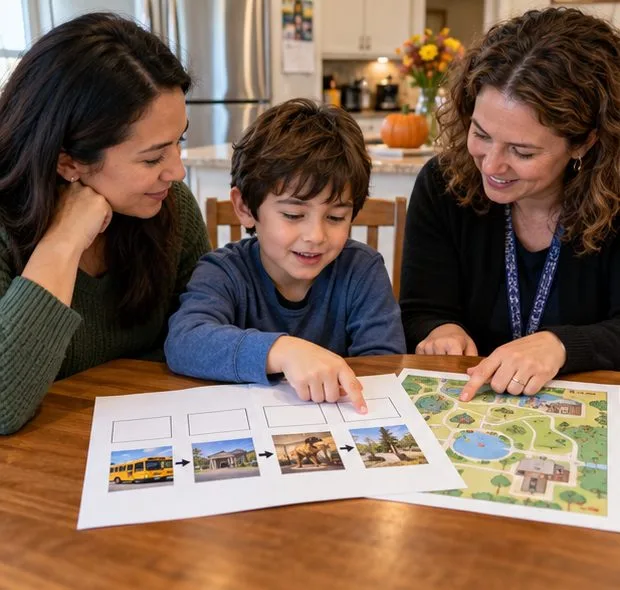
Start with a shared conversation: the child points to a photo sequence while two adults review the route and plan.
What is established, what varies, and what still needs checking?
What you can say
What to do next
Established: Sensory reactions can involve how sounds, smells, tastes, sights, or textures feel. The CDC notes that autistic children may not show every example listed.
Ask about this child’s actual experiences instead of assuming that a diagnosis predicts a specific trigger.
Individual: Which situations are tiring, which supports help, and how the child communicates discomfort can differ from one child to another and across settings.
Use examples from home, school, and previous outings. Confirm whether a familiar support works outside its usual setting.
Unknown until confirmed: The bus noise, crowd level, lighting, weather, wait times, meal arrangements, and availability of a quieter place on this particular trip.
Ask the teacher or venue about the itinerary and practical options; update the plan when details change.
The CDC describes unusual reactions to sound, smell, taste, sight, or touch among possible autism characteristics, while also noting that children may not have all or any of the listed examples. That is a reason to ask, not a reason to presume. Review the CDC’s autism signs and symptoms information and its overview of autism, which emphasizes that abilities and support needs vary. These pages describe general information; they cannot tell a family what one child will need on a field trip.
Checklist to discuss before the trip
1. Learn the schedule and transition points
What time does the class leave, arrive, eat, change activities, and return?
How long is the bus or car ride? Is there a line, security check, ticket desk, or crowded indoor area?
Will the group move between indoor and outdoor spaces? What is the plan if rain, wind, or a temperature change affects the schedule?
Can the teacher share the route, venue website, or a few current photographs ahead of time?
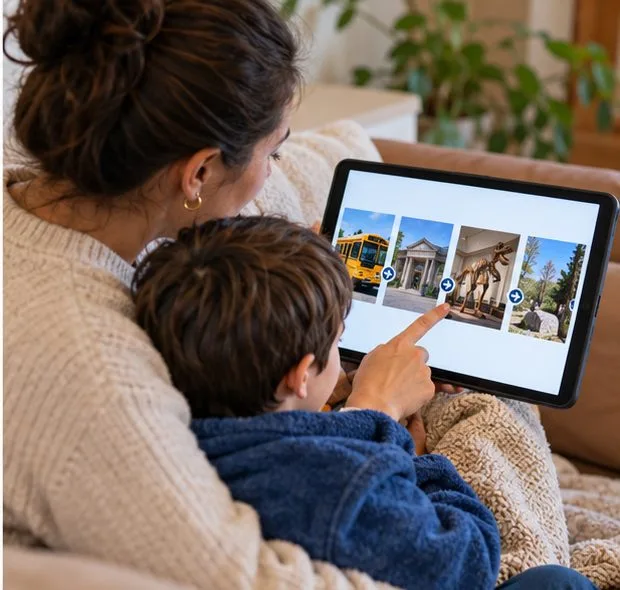
A photo sequence can make the order of events easier to review: arrive at school, board the bus, enter the venue, visit an exhibit or trail, take a break, and return. Keep it honest and simple. If lunch or the return time is not confirmed, label it as “not confirmed” instead of showing it as certain. Look through the sequence more than once if that is already helpful for the child, and let them ask questions or point to the part they want to understand.
A simple visual preview can show the order of familiar and unfamiliar parts; leave uncertain details clearly open.
2. Name the sensory questions without assuming the answers
Use the list as prompts, not as a score sheet. Mark “helpful,” “hard,” “not sure,” or “not relevant” using the family’s and child’s own words.
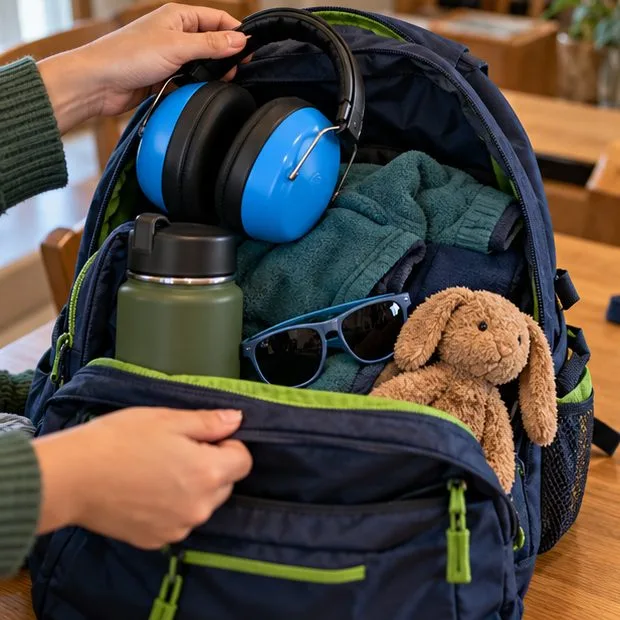
Sound: Does the child find bus engines, group conversation, announcements, hand dryers, or sudden cheering difficult? Do familiar ear defenders or earplugs help, and can the child still hear safety directions when they use them?
Sight: Are glare, busy displays, flashing or changing screens, or a visually crowded room tiring? Would a cap, sunglasses, or a place to look away be useful and allowed?
Touch and clothing: Do seams, a new raincoat, damp sleeves, cold hands, or layered clothing affect comfort? Pack familiar layers and check the weather rather than introducing a new item on trip day.
Smell and food: Are strong food smells, unfamiliar meals, or eating in a crowded room concerns? Confirm whether the child can bring familiar food and where lunch will happen.
Movement and space: How does the child handle a moving bus, standing in line, a long walk, uneven ground, or being close to other people? Ask about the route and rest points.
Do not pack a support simply because it appears on a generic autism list. A familiar item that the child already uses may be worth bringing; a new sensory tool may be distracting, uncomfortable, or ineffective. Try unfamiliar equipment during an ordinary, low-pressure moment first, and agree with school staff on when it can be used.
Pack only supports the child knows and uses; confirm with the teacher how any sound-reducing item fits with safety instructions.
3. Agree on communication and an early response
Ask the child and caregivers how the child says “I need a break,” “too loud,” “I’m cold,” or “I don’t understand.” That might be spoken words, a gesture, a communication device, a written card, or another familiar method. Make sure the adults who will be with the group know how to recognize and respond to it. Do not require the child to explain a need in a new way when the environment is already demanding.
Share a few individual signs that the family or school has noticed may mean the child needs support, while leaving room for the child to communicate differently on the day. Agree on a calm first response: reduce words, offer the pre-agreed choice, move to the agreed location if safe, and give the child time. Avoid promising that a break will prevent every difficult moment; it is one support option, not a guarantee.
4. Make the break and supervision plan concrete
Which adult is the child’s main check-in person, and who is the backup if that adult is helping someone else?
Where can the child take a short break while remaining supervised?
How can the child ask to leave a noisy or crowded area, and how will the group rejoin afterward?
How will staff handle a changed route, delayed bus, lost item, or an early return?
Are any existing school plans, health instructions, communication supports, or mobility needs relevant to this trip? Who needs the information?
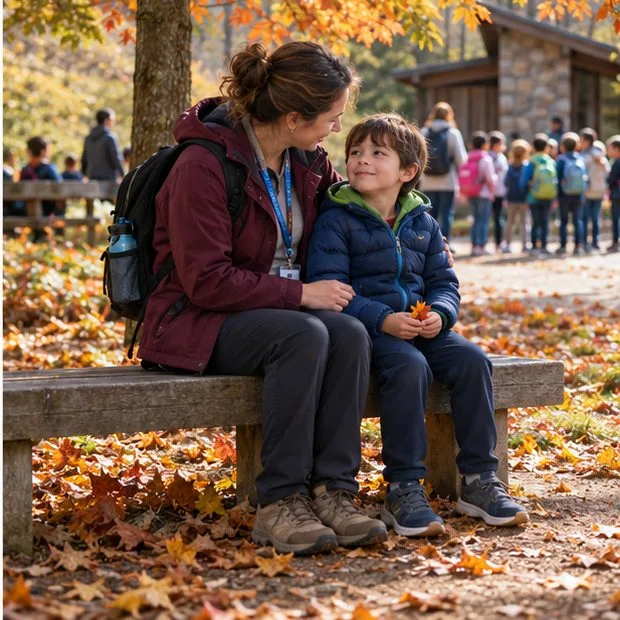
A break should be planned as a way to support participation, not treated as a reward for being overwhelmed or as automatic exclusion from the outing. The exact place and staffing depend on the venue, the child, and school procedures. Ask the teacher what supervision is possible and agree on a safe plan before departure. In U.S. public schools, the Department of Education says students with disabilities have equal opportunities to participate in school activities, including field trips; the child’s specific supports and process depend on the applicable school plan and circumstances. See the Department’s disability discrimination overview for general information.
A pre-agreed supervised pause can give the child space to check in before deciding how to rejoin the group.
A short note to send the teacher
Families can adapt this template rather than writing a long report. Share only information relevant to supporting the student on this trip, and use the school’s established method for private or health-related details.
My child is looking forward to: [interest, activity, or part of the trip].
Possible hard parts for my child: [specific sound, transition, clothing, crowd, food, movement, or uncertainty; write “not sure” where unknown].
What usually helps: [familiar item, preview, clear one-step direction, extra time, quieter spot, or other child-specific support].
How my child asks for help or a break: [words, gesture, device, card, or other communication].
What adults may notice: [individual signs shared by the family or school; avoid treating them as a diagnosis or certainty].
Break and check-in plan: [adult, supervised location, and how the child can rejoin].
What we still need to confirm: [bus, schedule, lunch, weather plan, access, or venue details].
Common misunderstandings to avoid
“Every autistic child needs the same sensory kit.” That is not supported by the CDC’s description: sensory responses are examples that may occur, and individual abilities and needs vary. Ask what this child uses and likes, then pack accordingly.
“A visual schedule guarantees the day will go smoothly.” A preview can explain the expected sequence, but weather, crowds, delays, or venue changes may still happen. Show what is known, identify what might change, and tell the child how an adult will communicate an update.
“If the child takes a break, they have missed the trip.” A break may be one route back to participation, but the right choice depends on the child’s preferences and safety. Ask the child what a useful pause looks like and decide with the teacher how to rejoin or choose another option.
After the outing: update the next plan
When the child has had time to rest, ask what they liked, what felt uncomfortable, and what they would change next time. Caregivers and teachers can compare the plan with what actually happened: which sensory details were accurate, which were different, whether the communication method worked, and whether the break location was practical. Write down only useful observations, such as “the bus ride was fine, but the lunch room was too crowded,” rather than broad conclusions about the child.
This checklist is a conversation aid, not a clinical assessment or a replacement for an IEP, Section 504 plan, health plan, or district procedure. The CDC and U.S. Department of Education sources were checked September 28, 2026. General guidance cannot predict a specific child’s response or establish the accommodations required in an individual case; confirm trip details and agreed supports directly with the school.