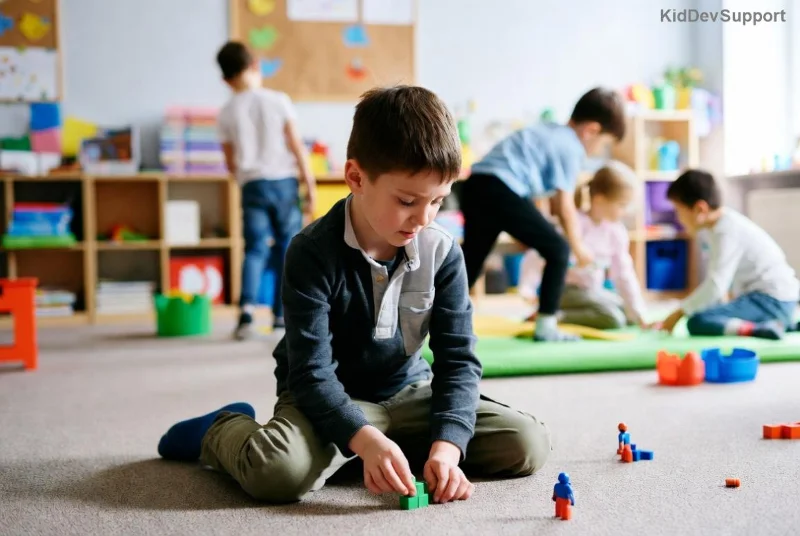
Imagine your child with autism moving confidently, balancing effortlessly, and engaging more in daily activities. Physical therapy for autism focuses on strengthening core muscle tone, addressing a common challenge in autism spectrum disorder (ASD). Weak core muscles often lead to poor posture, instability, and limited motor skills. But with targeted therapy, real transformation is possible.
This guide dives deep into how physical therapy for autism builds core muscle tone, offering practical exercises, benefits, and steps to start. Stay with us to discover evidence-based strategies from the latest research that keep kids active and independent.

Understanding Core Muscle Tone Challenges in Autism
Children with autism frequently experience hypotonia (low muscle tone), particularly in the core—the muscles around the abdomen, back, and pelvis. This impacts balance, coordination, and even sensory processing. Latest studies highlight that up to 50-80% of kids on the spectrum face motor delays linked to weak cores.
Physical therapy for autism targets these issues by improving trunk stability. A strong core acts as the body's foundation, enhancing everything from sitting upright to running. Without it, children may avoid physical play, leading to further isolation.
Proven Benefits of Physical Therapy for Autism on Core Muscle Tone
Strengthening core muscle tone through therapy yields transformative results:
- Improved Posture and Balance: Better alignment reduces falls and boosts confidence. 🏆
- Enhanced Motor Skills: Easier crawling, walking, and sports participation.
- Sensory Integration: Core work calms the nervous system, aiding focus.
- Daily Function Gains: Independence in dressing, eating, and school tasks.
- Emotional Boost: Success in movement builds self-esteem and reduces frustration.
Recent clinical trials confirm these outcomes, showing measurable gains in core strength after 12-week programs tailored for ASD.
Essential Core Exercises in Physical Therapy for Autism
Therapists customize exercises to a child's sensory profile and skill level. Start slow, use fun props like therapy balls, and incorporate sensory elements like music. Here's a structured table of beginner-to-advanced core strengthening exercises for autism:
| Exercise |
Description |
Reps/Sets |
ASD Adaptation |
| Superman Hold |
Lie on stomach, lift arms and legs like flying. |
10-20 seconds, 3 sets |
Use visual cues or favorite superhero theme. |
| Seated March |
Sit tall, alternate knee lifts. |
20 marches per leg, 3 sets |
Add lights or sounds for engagement. |
| Bridge Pose |
Lie on back, lift hips into a bridge. |
10-15 seconds, 5 reps |
Place stuffed animal on belly for motivation. |
| Therapy Ball Roll |
Kneel over ball, roll forward gently. |
5-10 rolls, 3 sets |
Incorporate deep pressure for calming. |
| Plank Variations |
Hold forearm plank on knees. |
10-30 seconds, build up |
Use timer with rewards. |
Progress by adding resistance bands or unstable surfaces. Consistency is key—aim for 3-5 sessions weekly.
![Physical therapist working with child on core strengthening for autism]()
How Physical Therapy for Autism is Delivered
Professional sessions last 30-60 minutes, often in clinics, homes, or schools. Licensed therapists assess baseline tone using tools like the Bruininks-Oseretsky Test. Home programs extend benefits, with parents trained in modifications.
For best results, combine with occupational therapy. Latest guidelines from CDC emphasize early intervention before age 3 for optimal core muscle tone gains.
Real-World Success: Stories of Core Strength Triumphs
Take Alex, a 6-year-old with autism: After 6 months of targeted physical therapy for autism, his core endurance doubled, enabling bike riding and playground fun. Parents report fewer meltdowns tied to physical frustrations.
Evidence backs this: Meta-analyses show 70% improvement in gross motor skills via core-focused therapy. Track progress with simple metrics like hold times or balance tests.
Getting Started with Strengthening Core Muscle Tone Today
- Consult a Specialist: Seek a pediatric PT experienced in ASD.
- Individualized Plan: Get a custom program based on evaluation.
- Home Integration: Use daily routines like tummy time for infants.
- Monitor & Adjust: Reassess every 4-6 weeks.
- Support Tools: Therapy balls, wedges, or apps for tracking.
Insurance often covers sessions—check with providers. Free resources abound online from trusted orgs like Autism Speaks.
Conclusion: Empower Your Child's Future with Physical Therapy for Autism
Strengthening core muscle tone isn't just therapy—it's a gateway to confidence, play, and connection. By prioritizing physical therapy for autism, you're investing in lifelong mobility and joy. Start small today, and watch your child thrive. What's your first step? Share in the comments or consult a pro now for personalized guidance.
Ready for more? Explore our guides on sensory integration next!