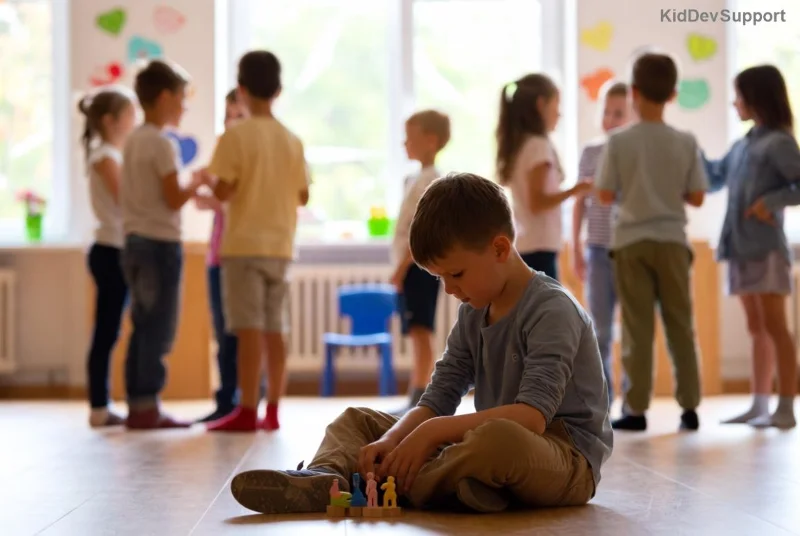
Every parent wants the best for their child, especially when navigating education for students with disabilities. The debate between inclusion classrooms and special education classrooms rages on. Which model fosters true growth—social, academic, and emotional? This article breaks it down with the latest research, expert insights, and practical advice to help you decide. Stick around to discover personalized factors that tip the scales.

What Are Inclusion Classrooms?
Inclusion classrooms integrate students with disabilities into general education settings alongside typically developing peers. Support comes via aides, modified curricula, or accommodations under laws like the Individuals with Disabilities Education Act (IDEA). The goal? Full participation with peers for natural social modeling. ✅
Teachers adapt lessons for all, promoting equity. Recent studies show inclusion improves self-esteem and peer relationships, but success hinges on proper training and resources.
Understanding Special Education Classrooms
Special education classrooms provide tailored instruction in separate settings for students with specific needs, like autism or learning disabilities. Smaller groups (often 6-12 students) allow intensive, individualized teaching with specialized tools. This model shines for severe needs, offering focused remediation without general class distractions.
It's not isolation—many include mainstreaming for electives or social time. The latest data from the U.S. Department of Education highlights how these rooms excel in building foundational skills.
![Students in special education setting with focused learning]()
Pros and Cons: Side-by-Side Comparison
To cut through the noise, here's a clear pros and cons table for inclusion vs special education classrooms. This framework helps weigh options based on evidence.
| Aspect |
Inclusion Classrooms |
Special Education Classrooms |
| ✅ Pros: Social Skills |
Daily peer interaction builds empathy and friendships. Studies link it to higher social competence. |
Targeted social skills training in safe space; less overwhelm. |
| ✅ Pros: Academic Growth |
Motivation from peers; higher standards push achievement. |
Custom pace prevents gaps; excels for complex needs. |
| ❌ Cons: Support Needs |
Requires trained staff; under-resourced schools struggle. |
Risk of stigma or delayed mainstreaming. |
| ❌ Cons: Individual Attention |
Larger classes dilute focus for severe disabilities. |
Limited peer diversity; potential isolation. |
This table draws from the latest meta-analyses, showing neither is universally superior—context matters.
Latest Research: What the Data Says
Recent comprehensive reviews, including those from the National Center for Special Education Research, reveal nuanced outcomes. Inclusion boosts long-term employment rates by 20-30% for mild disabilities, thanks to real-world exposure. Conversely, special education classrooms yield better literacy gains for students with intellectual disabilities, per randomized trials.
A landmark study across 50 districts found hybrid models—part inclusion, part special ed—optimal for 70% of cases. For autism spectrum, early inclusion aids communication, but intensive special ed prevents regressions. IDEA guidelines emphasize Least Restrictive Environment (LRE), tilting toward inclusion when feasible.
![Child thriving in inclusive education with peer support]()
Key Factors to Choose the Right Model
- Child's Needs: Mild learning issues? Lean inclusion. Severe cognitive delays? Prioritize special ed.
- School Resources: Check teacher ratios (ideal: 1:10 for special ed) and training certifications. 🏆
- Progress Monitoring: Use IEPs to trial models; switch if no gains in 6-12 months.
- Family Input: Parental surveys show involved parents see 15% better outcomes regardless of model.
Hybrid approaches are rising, blending both for flexibility. Consult specialists for assessments.
So, Which is Better: Inclusion or Special Education Classrooms?
There's no one-size-fits-all winner. Inclusion triumphs for social and independence skills in supportive environments, preparing kids for life beyond school. Special education classrooms dominate for targeted academic mastery, especially early on. The latest evidence favors what's individualized—often a mix.
Success stories abound: Inclusive settings helped a student with dyslexia excel in high school debate, while special ed transformed nonverbal autism cases into communicators. Your child's IEP team holds the key.
Next Steps: Empower Your Decision
Ready to advocate? Review your school's data, request observations, and explore hybrids. The right choice unlocks potential—don't settle. Share your experience below or consult pros for tailored advice. Which model worked for you? Let's discuss in comments! 🚀