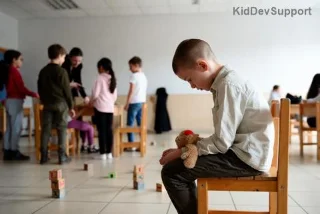
Imagine encountering someone with autism spectrum disorder (ASD) and assuming you now understand the entire condition. This common misconception overlooks the profound diversity of the Autism Spectrum. The timeless adage "Meeting One Person is Meeting One Person" encapsulates this truth: every autistic individual is a unique mosaic of strengths, challenges, and experiences. In this article, we'll explore this variability, backed by the newest insights, to foster deeper understanding and effective support. 🩺

What Defines the Diversity of the Autism Spectrum?
The Autism Spectrum refers to a range of neurodevelopmental conditions characterized by differences in social communication, sensory processing, and repetitive behaviors. Unlike uniform disorders, ASD manifests in countless ways, influenced by genetics, environment, and co-occurring conditions. Recent diagnostic frameworks emphasize this spectrum nature, moving away from rigid categories to a fluid model of support needs.
Key hallmarks include:
- Challenges in social interaction and nonverbal cues.
- Repetitive interests or behaviors.
- Sensory sensitivities or seeking.
- Uneven cognitive and developmental profiles.
Yet, these traits vary wildly. One person might excel in visual thinking while struggling with eye contact; another could be nonverbal but a math prodigy. This diversity of the Autism Spectrum means no two profiles are identical.
Busting the Myth: No "Typical" Autistic Person Exists
The phrase "Meeting One Person is Meeting One Person"—often attributed to autistic advocates—challenges stereotypes. Media portrayals or single encounters can paint a narrow picture, like the "savant" genius or the "disruptive child." In reality, autistic adults might hold PhDs, thrive in tech, or navigate daily life independently, while others require lifelong support.
Newest research highlights this: genetic studies reveal hundreds of ASD-related genes, each contributing uniquely. Brain imaging shows varied connectivity patterns, explaining why interventions must be personalized. Avoid generalizations—embrace individuality to reduce stigma and improve outcomes.
Variations Across Core Domains
Autism Spectrum Disorder affects multiple domains differently:
| Domain |
Common Variations |
Potential Strengths |
| Social Communication |
From aloof to overly friendly; literal language use |
Deep loyalty, honesty, pattern recognition in relationships |
| Sensory Processing |
Over-sensitive (e.g., to noise) or under-sensitive |
Heightened focus in preferred environments |
| Executive Function |
Difficulty with planning, flexibility |
Exceptional detail-oriented skills |
| Intellectual Abilities |
Intellectual disability in ~30%; gifted in others |
Innovation in fields like engineering, arts |
This table illustrates the diversity of the Autism Spectrum, where challenges in one area often pair with gifts in another. For instance, sensory overload might hinder crowds but enable hyper-focus on intricate tasks. 💡
![Visual spectrum illustrating Autism diversity]()
Levels of Support: A Modern Framework
Current guidelines classify ASD by support levels rather than severity:
- Level 1: Requiring Support – Independent but needs help with social nuances.
- Level 2: Requiring Substantial Support – Marked difficulties; structured assistance daily.
- Level 3: Requiring Very Substantial Support – Severe impairments; near-constant aid.
Even within levels, experiences differ. A Level 1 adult might mask traits to "fit in," leading to burnout, while a child at the same level thrives with therapy. Tailored strategies—like sensory-friendly spaces or communication apps—unlock potential.
Real-Life Stories Highlighting Uniqueness
Consider Alex, a nonverbal teen who communicates via typing and designs apps (anonymized example from recent case studies). Or Maria, a corporate executive masking anxiety daily. These stories embody "Meeting One Person is Meeting One Person." They show how environment shapes expression: supportive schools foster independence, while misunderstanding amplifies struggles.
Gender differences add layers—women often internalize traits, leading to later diagnoses. Ethnic minorities face diagnostic biases, underscoring the need for inclusive awareness.
Latest Insights from Cutting-Edge Research
The newest studies emphasize neurodiversity: autistic brains process information differently, often superiorly in systemizing tasks. Longitudinal data reveals many "high-needs" children grow into self-sufficient adults with proper interventions. Early screening and personalized therapies, like ABA adaptations or tech aids, yield best results.
For evidence-based info, explore resources from trusted organizations: CDC Autism Page or Autism Speaks. These affirm the spectrum's breadth.
![Community of diverse autistic individuals]()
Practical Implications: Empowering Through Understanding
Recognizing autism diversity transforms lives:
- For Families: Seek individualized IEPs and therapies.
- For Educators: Use visual schedules, quiet zones.
- For Employers: Offer flexible hours, clear instructions—boosting productivity.
- For Society: Promote acceptance, reducing mental health burdens like anxiety (common in 40-50% of cases).
Tools like social stories or VR training bridge gaps, celebrating strengths. 🌟
Conclusion: Embrace the Spectrum's Infinite Variety
The diversity of the Autism Spectrum is its defining feature. "Meeting One Person is Meeting One Person" reminds us to listen, adapt, and value each story. By ditching stereotypes, we unlock doors to thriving lives. What's one way you'll apply this today? Share in comments or explore personalized resources below. Your understanding can change a life—stay curious, stay inclusive.
Ready for more? Dive into tailored ASD strategies in our next guide.