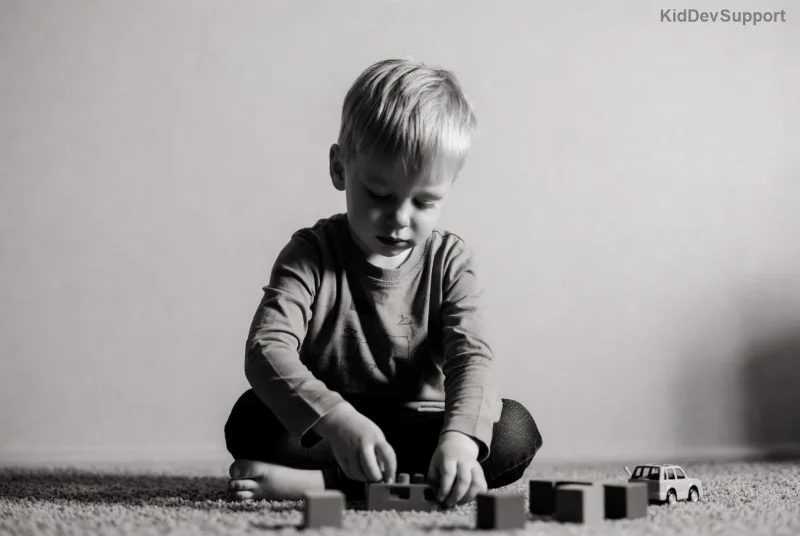
In the world of neurodevelopmental disorders, the connection between autism and fine motor skills stands out as a critical area of focus. Many individuals with Autism Spectrum Disorder (ASD) face unique challenges in coordinating precise hand and finger movements, affecting everything from buttoning a shirt to writing neatly. Understanding this link isn't just academic—it's a roadmap for parents, educators, and therapists to foster independence and confidence. Keep reading to uncover the science, real-world effects, and actionable strategies backed by the newest research.

What Is Autism Spectrum Disorder?
Autism, or Autism Spectrum Disorder (ASD), is a lifelong condition characterized by differences in social communication, sensory processing, and repetitive behaviors. It affects about 1 in 36 children, with symptoms varying widely across the spectrum. While much attention goes to social and behavioral traits, motor skill deficits are increasingly recognized as a core feature in the newest diagnostic frameworks.
Defining Fine Motor Skills: The Building Blocks of Precision
Fine motor skills involve the small muscles of the hands, wrists, and fingers for tasks requiring dexterity and control. These include grasping objects, using utensils, tying shoelaces, or manipulating tools. In typical development, these skills emerge early—pincher grasp by 9-12 months, scissor use by age 4. Disruptions here can ripple through academics, self-care, and play, making the connection between autism and fine motor skills profoundly impactful.
The Strong Connection Between Autism and Fine Motor Skills: What Research Reveals
Recent studies confirm a robust connection between autism and fine motor skills deficits. Up to 80% of children with ASD exhibit delays, often more severe than gross motor issues. This isn't coincidence—brain imaging shows atypical connectivity in the cerebellum and basal ganglia, regions key for motor planning. Dyspraxia, a motor coordination disorder, co-occurs in over 50% of autism cases, amplifying challenges.
Why does this matter? Early motor delays predict later academic struggles, like handwriting, which ties directly to reading and math proficiency. The good news? Targeted interventions can bridge these gaps, improving outcomes across the board.
Common Fine Motor Challenges in ASD vs. Typical Development
| Skill |
Typical Age Milestone |
Challenges in Autism |
| Pincher Grasp (thumb-finger) |
9-12 months |
Delayed grasp; drops objects frequently |
| Buttoning/Zipping |
3-4 years |
Avoids tasks; frustration leads to meltdowns |
| Using Scissors |
4 years |
Poor control; irregular cuts or refusal |
| Handwriting |
5-6 years |
Illegible script; slow speed affects learning |
| Tying Shoelaces |
5-6 years |
Persistent difficulty; relies on alternatives |
![Therapist helping child with autism improve fine motor skills]()
Root Causes: Why Fine Motor Skills Struggle in Autism
Several factors underpin this connection between autism and fine motor skills. Sensory processing differences in ASD—like hypersensitivity to touch—can make handling materials aversive. Cerebellar dysfunction impairs timing and force control, while executive function challenges hinder planning sequences. Genetic links, such as mutations in SHANK3 or MET genes, further tie motor pathways to autism traits.
The newest neuroimaging data highlights white matter irregularities, explaining why fine motor skills often lag even when IQ is average or above. Environmental influences, like prenatal exposures, may exacerbate these, but early screening changes the trajectory.
Daily Life Impacts: Beyond the Classroom
Deficits in fine motor skills extend far beyond therapy rooms. Children with autism may avoid mealtimes due to fork struggles, leading to nutritional gaps. Self-care tasks foster dependence, eroding self-esteem. In school, poor handwriting hampers participation, increasing frustration and isolation.
Long-term, adults with unresolved issues face employment barriers—think typing speed or assembly work. Yet, addressing fine motor skills early boosts social play, peer bonds, and emotional regulation. Imagine the confidence from mastering a zipper: small wins build big successes 🏅.
Diagnosis: Spotting the Signs Early
Early identification of fine motor skills issues in autism relies on standardized tools like the Peabody Developmental Motor Scales or Beery-Buktenica Developmental Test of Visual-Motor Integration. Pediatricians screen at well-child visits, noting asymmetries like toe-walking alongside grasp delays. If suspected, consult an occupational therapist (OT) for comprehensive evaluation.
For reliable info, check resources from trusted organizations: CDC Autism Page 🩺 or Autism Speaks.
![Occupational therapy session for fine motor skills in autism]()
Proven Interventions: Building Fine Motor Skills in Autism
Occupational therapy (OT) is the gold standard, using play-based activities like playdough pinching or bead threading. The newest protocols integrate sensory integration, yielding 20-30% gains in dexterity within months. Handwriting Without Tears® and Loops & Other Groups programs target writing specifically.
Tech aids shine too: apps like Dexteria or therapeutic gaming devices provide engaging practice. Home strategies include:
- Daily finger exercises with stress balls.
- Building with LEGO® for precision.
- Adaptive tools like loop scissors.
School accommodations, like keyboarding training, ensure equity. Consistency is key—pair with positive reinforcement for motivation 😊.
Quick OT Activities for Fine Motor Skills in ASD
| Activity |
Target Skill |
Duration |
Tips |
| Tearing Paper |
Finger strength |
5 mins |
Start with soft tissue |
| Button Boards |
Dexterity |
10 mins |
Use Velcro for success |
| Puzzle Pieces |
Precision grip |
15 mins |
Choose large pieces first |
| Clothespin Transfers |
Pincher grasp |
10 mins |
Clip to a line |
Empowering Parents and Educators: Practical Tips
As a parent, track progress with simple charts and celebrate milestones. Collaborate with OTs for home programs. Educators, integrate motor breaks—think "finger yoga" during transitions. Advocacy ensures IEPs include fine motor skills goals.
Remember, every child progresses uniquely. Patience and persistence unlock potential, turning challenges into triumphs.
Final Thoughts: Strengthen the Connection Between Autism and Success
The connection between autism and fine motor skills is undeniable, but it's not destiny. With awareness, early action, and tailored support, individuals with ASD thrive. Dive deeper into personalized plans with professionals, and watch independence flourish. What's one small step you'll take today? Share in the comments—your journey inspires others.