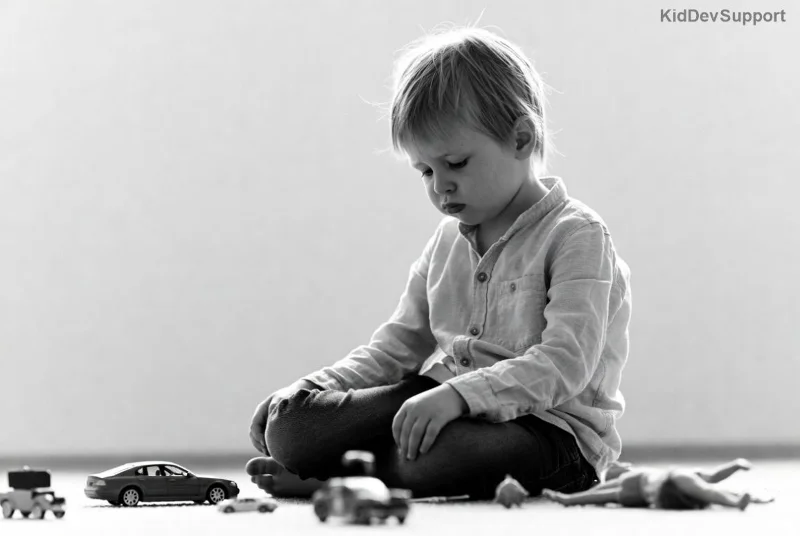
Imagine a child hitting milestones—babbling, smiling, engaging—only to suddenly withdraw, lose speech, and retreat into silence. This heartbreaking phenomenon is regressive autism, affecting up to 30% of children with autism spectrum disorder (ASD). But why does regressive autism happen? While the exact causes remain elusive, cutting-edge research offers compelling current scientific theories. In this guide, we'll break down the leading hypotheses, backed by the latest evidence, to help you understand this complex puzzle. Stick around as we explore genetics, immunity, and beyond—unlocking insights that could guide early intervention.
What Exactly is Regressive Autism?
Regressive autism differs from early-onset ASD. Children typically develop normally for at least 12 months, often reaching social and communication milestones, before a dramatic loss of skills. Key signs include:
- Sudden loss of words or phrases (most common trigger).
- Decline in eye contact and social reciprocity 🧒.
- Increased repetitive behaviors or sensory sensitivities.
- Regression often peaks between 18-24 months.
Unlike classic autism, this regression can feel like a "switch flipped," prompting urgent questions: why does regressive autism happen? Recent studies confirm it's a distinct subtype, with unique brain imaging patterns showing accelerated changes post-regression.
Prevalence and Early Detection: Key Facts
Affecting roughly 1 in 4 ASD cases, regressive autism demands attention. Early videos of children can reveal subtle pre-regression signs, like reduced babbling. Detecting it promptly allows therapies like ABA to reclaim lost ground. But to prevent or mitigate, we must grasp the current scientific theories.
![Brain scan related to autism regression research]()
Leading Current Scientific Theories on Why Regressive Autism Happens
Science points to a multifactorial model: genes load the gun, environment pulls the trigger. Here's a focused look at the most promising theories from recent research.
1. Genetic and Epigenetic Factors
At the core, genetics play a starring role. De novo mutations—new changes not inherited—disrupt brain development. Recent genomic studies reveal that children with regressive autism often carry variants in genes like CHD8 or SCN2A, affecting synaptic pruning.
Epigenetics adds intrigue: environmental signals alter gene expression without DNA changes. Stress or toxins might "silence" protective genes, triggering regression. Twin studies show 80-90% heritability, yet regression-specific genes are emerging as hotspots.
2. Immune System Dysregulation and Neuroinflammation
A breakthrough theory: the brain's immune cells (microglia) go haywire. In regressive autism, post-mortem brain tissue shows chronic inflammation. Maternal immune activation (MIA)—like infections during pregnancy—primes this response.
Latest findings link autoantibodies attacking brain proteins, mimicking regression in animal models. Cytokine storms, triggered by viruses (e.g., HHV-6), correlate with skill loss. This theory explains the sudden onset: an immune "tipping point."
3. Gut-Brain Axis Disruption
The microbiome holds clues. Children with regressive autism often have gut dysbiosis—imbalanced bacteria—preceding symptoms. Leaky gut allows toxins to reach the brain, sparking inflammation.
Recent fecal transplants in mice reversed ASD-like behaviors, hinting at causality. Probiotics trials show promise in stabilizing regressions. Why here? The vagus nerve links gut signals directly to brain circuits governing social skills.
4. Mitochondrial Dysfunction and Metabolic Stress
Energy factories in cells, mitochondria falter in 5% of ASD cases, but up to 80% in regressive subtypes. Oxidative stress overwhelms them, halting neural growth.
Supplements like CoQ10 stabilize energy in pilot studies. Triggers? Toxins or infections overload mitochondria, explaining why some kids regress post-illness.
5. Environmental Triggers: Beyond Myths
Vaccines? Debunked by massive studies—no link. But real culprits include air pollution, pesticides, and early antibiotic use disrupting the microbiome. Combined with genetic vulnerability, they precipitate regression.
To compare these current scientific theories, here's a handy overview:
| Theory |
Key Mechanism |
Evidence Level |
Potential Interventions |
| Genetic/Epigenetic |
Synaptic gene mutations |
High (genomic sequencing) |
Gene therapy trials |
| Immune Dysregulation |
Microglial activation |
High (brain imaging, MIA models) |
Anti-inflammatories 🩺 |
| Gut-Brain Axis |
Microbiome imbalance |
Moderate (transplant studies) |
Probiotics, diet |
| Mitochondrial |
Energy deficits |
Moderate (biomarker tests) |
Supplements |
| Environmental |
Toxin exposure |
Emerging (epidemiology) |
Reduce pollutants |
![Scientific research on autism theories]()
Interconnected Pathways: A Unified Model
No single theory explains all. The latest consensus? A "perfect storm": genetic risk + immune hit + gut disruption = regression. Brain scans show synchronized changes across regions, supporting this convergence.
For deeper dives, check CDC's autism research hub or NIMH updates.
What Can Parents Do? Actionable Steps
While waiting for cures:
- Monitor milestones with apps; video regressions.
- Seek genetic/metabolic testing early ⚕️.
- Explore anti-inflammatory diets or microbiome support.
- Enroll in clinical trials via regressive autism networks.
Early intervention recovers 50% of skills in some cases. Hope lies ahead—stay tuned for gene-editing breakthroughs.
Conclusion: The Path Forward
Why does regressive autism happen? Through current scientific theories, we see a tapestry of genes, immunity, and environment. This knowledge empowers action, reducing isolation and fostering recovery. Share your story below—what theory resonates? For more on ASD therapies, explore our related guides. Knowledge is the first step to brighter futures. 🌟