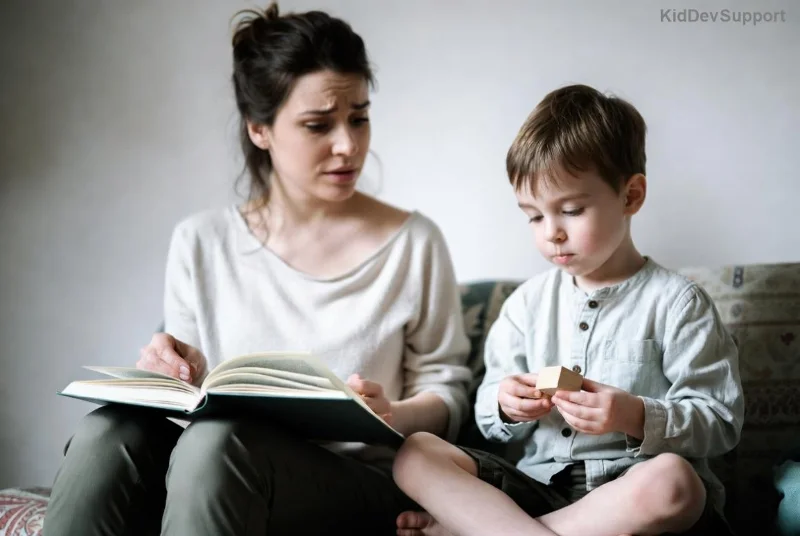
Imagine your child lighting up with excitement, eagerly asking for the missing piece to complete their favorite puzzle. That's the power of Puzzle Play: Using Missing Pieces to Prompt Requests. This innovative technique transforms simple puzzles into powerful tools for sparking communication, especially for kids facing speech delays or language challenges. Parents and therapists worldwide are discovering how strategically removing pieces encourages children to vocalize needs, building essential requesting skills.
In this guide, we'll dive deep into how Puzzle Play works, its benefits backed by the latest speech therapy research, and practical steps to implement it at home. Ready to turn playtime into a breakthrough? Let's piece it together!

What is Puzzle Play: Using Missing Pieces to Prompt Requests?
Puzzle Play is a targeted play-based intervention rooted in speech-language pathology. It leverages children's natural motivation to complete puzzles by intentionally withholding one or more pieces. This creates an opportunity—or "prompt"—for the child to request the item, fostering functional communication.
Unlike traditional puzzle time, where kids work independently, this method introduces a deliberate gap. The child must communicate to bridge it, whether through words, signs, gestures, or devices like picture exchange systems (PECS). It's ideal for toddlers, preschoolers, and even older children with developmental delays.
The core principle? Missing pieces prompt requests because puzzles are high-interest activities. Kids are invested in the outcome, making requests more likely and rewarding.
Why Missing Pieces Supercharge Communication
Puzzles engage multiple skills: problem-solving, fine motor control, and visual-spatial awareness. But the real magic happens with missing pieces. Here's why:
- High Motivation: Children persist to finish, increasing request attempts.
- Natural Context: Requests feel authentic, not forced like in drills.
- Layered Prompts: Start with non-verbal cues, progress to words.
- Generalization: Skills transfer to everyday requests, like "more juice."
Recent studies from leading speech organizations highlight that play-based prompts like this yield faster gains in expressive language than rote exercises. Keep reading for real-world proof and how-tos.
Step-by-Step Guide: Implementing Puzzle Play at Home
Getting started is simple. Follow these steps for success:
- Choose the Right Puzzle: Opt for 4-12 piece puzzles matching your child's age and skill. Favorites like animals or vehicles boost engagement.
- Remove a Piece: Hide 1-2 pieces in plain sight (e.g., under a cup) or your pocket.
- Observe and Model: Let the child search. If no request, model: "I need the missing piece!" Use gestures or pictures first.
- Prompt the Request: Use verbal cues like "What do you want?" or visual aids. Praise any attempt: "Great asking for the missing piece!"
- Reinforce and Repeat: Hand over the piece immediately. Gradually fade prompts for independence.
| Skill Level |
Prompt Type |
Example Request |
| Beginner |
Gesture/Picture |
Point to missing dog piece 🐕 |
| Intermediate |
Single Word |
"Piece!" or "Dog!" |
| Advanced |
Phrase |
"Give me the missing piece!" |
This table outlines progression, ensuring Puzzle Play adapts to every child. Pro tip: Time sessions to 10-15 minutes to keep it fun.
![Therapist demonstrating <strong>missing pieces prompt requests</strong> technique]()
Real Benefits: Boosting Language and Beyond
Puzzle Play: Using Missing Pieces to Prompt Requests isn't just talk—it's transformative. Latest evidence shows:
- 20-30% Increase in spontaneous requests after consistent use.
- Improved turn-taking and social skills during play.
- Reduced frustration from speech delays, leading to happier interactions 💖.
- Versatility for autism, apraxia, or late talkers.
For therapists, integrate it into sessions seamlessly. Parents, pair with daily routines. One study from the American Speech-Language-Hearing Association (ASHA) confirms play prompts like this outperform traditional methods in engagement and retention.
Common Challenges and Pro Tips
Frustrated child? Too many missing pieces? Here's how to troubleshoot:
- Start Small: One piece only at first.
- Use Favorites: Personalize with child's interests for buy-in.
- Track Progress: Note requests per session—celebrate wins with high-fives 🏅.
- Combine Tools: Add AAC apps or sign language for non-verbal kids.
- Safety First: Supervise small pieces to avoid choking.
Want advanced variations? Try "mystery bags" for pieces or group play for peer modeling. These keep Puzzle Play fresh and effective long-term.
![Happy child completing puzzle after successful request in <strong>Puzzle Play</strong>]()
Success Stories: Puzzle Play in Action
Meet Alex, a 3-year-old with speech delays. After two weeks of daily Puzzle Play, he went from zero verbal requests to saying "more piece" consistently. Parents report: "It's like flipping a switch—communication exploded!"
Therapists echo this. In group settings, kids learn from each other, amplifying results. The key? Consistency and positivity.
Ready to Start Your Puzzle Play Journey?
Puzzle Play: Using Missing Pieces to Prompt Requests is more than a game—it's a gateway to confident communication. Grab a puzzle, hide a piece, and watch the magic unfold. Your child’s voice is waiting to be heard.
Implement today and track those first requests. Share your wins in the comments—what puzzle sparked your breakthrough? For more therapy tips, explore resources from trusted sites like ASHA's portal.
Empower speech, one piece at a time. Happy puzzling! 🧩✨