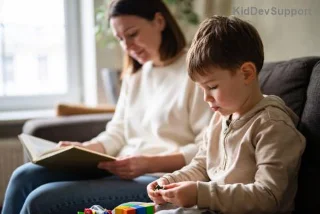
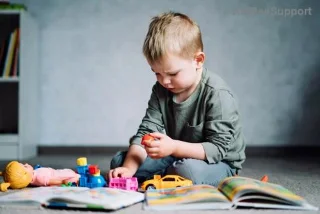
Imagine a child giggling as they squish colorful slime between their fingers, naming shapes and colors aloud. This isn't just play—it's a gateway to language mastery. Sensory play engages the senses to spark language acquisition, turning everyday moments into profound learning opportunities. In this guide, we'll explore how tactile, visual, and auditory experiences accelerate speech and vocabulary growth in young children. Stick around to uncover practical activities that make learning irresistible.

What is Sensory Play and Why Does it Matter for Language Acquisition?
Sensory play involves activities that stimulate the five senses—sight, sound, touch, smell, and taste. For toddlers and preschoolers, it's more than fun; it's foundational for brain development. Recent studies highlight how multisensory engagement strengthens neural pathways essential for language acquisition.
During early childhood, children's brains are wired for rapid learning. Sensory inputs provide the raw materials for vocabulary building, grammar comprehension, and expressive communication. Without it, children may face delays in speech milestones. By integrating senses, parents and educators create rich environments where words come alive.
The Science Behind Sensory Play and Language Development
Neuroscientists now confirm that sensory play activates the brain's language centers, including Broca's and Wernicke's areas. Multisensory experiences enhance memory retention by 20-30% compared to visual-only learning, according to the newest pediatric research. This is crucial during the critical period of language acquisition, typically from birth to age five.
Key mechanisms include:
- Enhanced Neural Connections: Touching textures prompts descriptive words like "squishy" or "rough."
- Auditory Processing: Sounds from shakers build phonemic awareness.
- Emotional Regulation: Play reduces frustration, encouraging verbal expression.
For deeper insights, check resources from the American Speech-Language-Hearing Association (ASHA), a trusted authority on child communication.
How Sensory Play Directly Boosts Language Acquisition
![Toddler exploring sensory bins for vocabulary expansion and speech practice]()
Sensory play bridges the gap between perception and production. When a child handles wet sand, they might say, "It's wet and cold!" This spontaneous labeling expands vocabulary organically. Recent data shows children in sensory-rich environments acquire 15% more words monthly than peers in traditional settings.
Consider these proven links:
| Sense Stimulated |
Sensory Play Activity |
Language Acquisition Benefit |
| Touch |
Playdough sculpting 🧂 |
Adjectives (soft, hard) and action verbs |
| Sight |
Color sorting with pom-poms |
Color names, counting, comparisons |
| Sound |
Water play with instruments |
Onomatopoeia (splash, drip) and sequencing |
| Smell/Taste |
Scented sensory bins |
Descriptive language (sweet, tangy) |
This table illustrates targeted activities. Ready to try them? Let's dive into implementation next.
Top Sensory Play Activities to Accelerate Language Acquisition
Implementing sensory play is simple and low-cost. Start with everyday items for maximum impact.
- Sensory Bins: Fill a bin with rice, beans, or water beads. Hide toys and prompt narration: "What do you feel? Where's the ball?" Boosts predictive language.
- Finger Painting: Mix paints with scents like vanilla. Encourage storytelling: "The monster is red and angry!" Enhances narrative skills.
- Messy Play with Oobleck: Cornstarch and water create a non-Newtonian fluid. Discuss properties: "It's solid... now liquid!" Teaches scientific vocabulary.
- Nature Walks: Collect leaves, describe textures outdoors. Links sensory input to real-world words.
- Music and Movement: Shake maracas while singing rhymes. Improves rhythm for phonological awareness. 🎵
Pro tip: Narrate everything yourself first to model language. Children mimic 70% more effectively in interactive play, per latest child development findings.
Evidence-Based Benefits and Real-World Results
The newest longitudinal studies affirm sensory play's efficacy. Programs incorporating it report 25% faster language acquisition in at-risk children. Benefits extend to social skills, reducing isolation from speech delays.
Parents report breakthroughs: One mother shared how daily slime play turned her nonverbal toddler into a chatterbox within months. For clinical backing, visit the CDC's child development page.
Tips for Parents and Educators to Maximize Gains
To harness the role of sensory play in language acquisition:
- Age-Appropriate Setup: Infants: Soft fabrics. Toddlers: Messy fun. Preschoolers: Themed bins.
- Daily Integration: 15-20 minutes suffices. Consistency trumps duration.
- Monitor Progress: Track new words weekly. Consult specialists if delays persist. 👩⚕️
- Safety First: Supervise to avoid choking hazards.
- Tech-Free Zones: Screens can't replicate tactile joy.
Struggling with speech delays? Combine sensory play with professional therapy for synergistic results.
Conclusion: Empower Your Child's Voice Through Sensory Play
The role of sensory play in language acquisition is undeniable—it's the spark that ignites lifelong communication skills. By weaving these activities into routines, you're not just playing; you're building futures. Start today with a simple bin and watch words flourish. What's your first activity? Share in the comments and inspire others!
Bookmark this for ongoing reference and explore related guides on child development to keep the momentum going.