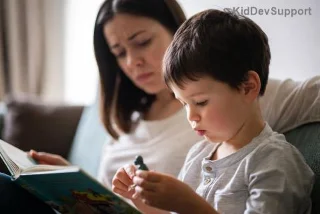
Is your little one babbling yet, or are you noticing quiet moments that worry you? Understanding speech delay milestones is crucial for every parent. Early detection of speech delay can make all the difference, allowing timely intervention to boost your child's communication skills. This guide breaks down what to expect month by month, based on the latest guidelines from trusted sources like the CDC and ASHA. Stick around to discover red flags, supportive tips, and when to consult a professional—your child's voice starts here! 😊

What Is a Speech Delay and Why Track Milestones?
A speech delay occurs when a child doesn't meet expected speech delay milestones for their age, affecting sounds, words, or language comprehension. It's common—about 1 in 12 children experiences it—but early action prevents long-term issues like learning challenges. Tracking month by month helps parents spot delays early.
Key factors influencing speech: hearing health, environment, and genetics. Always rule out hearing loss first. For the most accurate benchmarks, refer to the CDC's developmental milestones.
Speech Delay Milestones: Month-by-Month Breakdown
Here's a clear month-by-month overview of typical speech development. Use this table as your quick reference, then dive into details below. Most children hit these by the end of each range—variations are normal, but consistent lags signal a potential speech delay.
| Age Range |
Typical Speech Milestones |
Speech Delay Red Flags |
| Birth to 3 Months |
Cooing, gurgling, crying variations, responds to sounds. |
No response to loud noises; no vocal changes. ⚠️ |
| 4-6 Months |
Babbling (ba-ba, da-da), laughs, mimics sounds. |
No babbling; doesn't turn to voices. 😟 |
| 7-9 Months |
Varied babbling, understands "no," gestures (wave bye). |
No consonant sounds; ignores names. ⚠️ |
| 10-12 Months |
First words (mama, dada specifically), points, follows simple directions. |
No words or gestures; no imitation. 😟 |
| 13-18 Months |
6-20 words, points to body parts, follows 1-step commands. |
Fewer than 6 words; no pointing. ⚠️ |
| 19-24 Months |
50+ words, 2-word phrases, names pictures. |
Under 50 words; no 2-word combos. 😟 |
| 25-36 Months |
200+ words, 3-4 word sentences, asks questions. |
Unclear speech; struggles with instructions. ⚠️ |
Birth to 6 Months: The Foundations of Sound
In the first 3 months, babies focus on basic vocalizations. By month 4-6, expect rhythmic babbling. If your baby isn't laughing or responding to your voice, it could indicate a speech delay. Tip: Talk face-to-face daily to encourage coos. Curious about hearing tests? Newborn screenings catch 95% of issues early.
7-12 Months: From Babble to First Words
This exciting phase brings real words! By 12 months, most say 1-3 words meaningfully. Red flag: No pointing or imitation. Engage with toys and songs—repetition builds neural pathways. Keep reading for toddler tips that could transform your routine.
![Toddler reaching speech milestone with parent]()
13-24 Months: Vocabulary Explosion
Toddlers here add words weekly. By 18 months, 20 words minimum; by 24, simple sentences. Speech delay signs include limited gestures or frustration from not being understood. Boost it: Read interactive books and narrate daily activities. Studies show 30 minutes of reading daily accelerates language by 20%.
25-36 Months: Sentences and Stories
Preschoolers form questions and tell short tales. If speech is mostly unintelligible to strangers, evaluate promptly. Pro tip: Limit screens—AAP recommends under 1 hour for ages 2-5 to prioritize real talk.
Red Flags for Speech Delay: When to Act
Don't wait if your child:
- Doesn't babble by 6 months.
- No words by 12-16 months.
- Can't follow simple directions by 24 months.
- Loses skills they once had (regression). 🚨
These signal potential speech delay. Early intervention, like speech therapy, yields 70-80% success rates per latest ASHA data. See your pediatrician for a referral—free programs like Early Intervention are available in many areas.
How to Support Speech Development at Home
- Talk constantly: Describe everything ("Look, red ball rolling!").
- Read aloud: Point to pictures; ask "What's this?"
- Sing and rhyme: Builds phonemic awareness.
- Respond and expand: Child says "ball"? Say "Big red ball!"
- Play turn-taking games: Mimics conversation.
These strategies, backed by pediatric experts, can close mild gaps without therapy. Track progress with apps or journals—what's one tip you'll try today?
When to Seek Professional Help for Speech Delay
Contact a doctor if milestones are missed by 25%. Speech-language pathologists (SLPs) assess via play-based evaluations. For resources, visit the ASHA speech development chart. Early help means brighter futures—many kids catch up fully! 🏆
Final Thoughts: Empower Your Child's Voice Today
Mastering speech delay milestones month by month equips you to nurture confidently. Every child develops uniquely, but vigilance ensures no delays slip by. Share your experiences in the comments, and consult pros if concerned. You've got this—start chatting more today for tomorrow's storyteller! 😊 Ready for more parenting wins? Bookmark and return.