Every parent dreams of hearing their toddler's first clear words turn into full sentences. But how to stimulate speech development in toddlers every day without fancy tools or endless frustration? The good news: simple, joyful routines can make a massive difference. Backed by the latest pediatric guidelines, these strategies build vocabulary, pronunciation, and confidence from 12-36 months. Let's dive into actionable steps that fit your busy life, keeping your little one engaged and chatting up a storm. ✅

Why Prioritize Speech Development in Toddlers Daily?
Speech development in toddlers is a critical window. By age 2, most kids use 50+ words and simple phrases; by 3, they form sentences. Early stimulation prevents delays affecting 1 in 12 children. Daily practice strengthens neural pathways, boosts social skills, and enhances cognitive growth. Ignoring it? Risks frustration, isolation, or later interventions. Start today—consistency is key for lasting results.
Key Milestones: Track Your Toddler's Progress
Monitor these benchmarks to gauge speech development in toddlers:
- 12-18 months: 5-20 words, points to objects, babbles with intonation.
- 18-24 months: 50+ words, 2-word phrases like "more milk."
- 24-36 months: 200-1000 words, 3-4 word sentences, follows 2-step directions.
If your toddler lags, daily boosts can catch them up. Pro tip: Narrate everything—"Look, red ball bounces!"—to model language naturally.
Top 10 Daily Activities to Stimulate Speech Development in Toddlers
Integrate these fun, zero-cost games into mealtimes, play, and bedtime. Aim for 15-30 minutes spread out—no marathons needed.
1. Sing and Rhyme Routines (Morning Magic)
Start the day with nursery rhymes like "Twinkle Twinkle." Exaggerate sounds: "Staaar!" Singing builds rhythm and phonics. Repeat daily for 5 minutes—watch words stick.
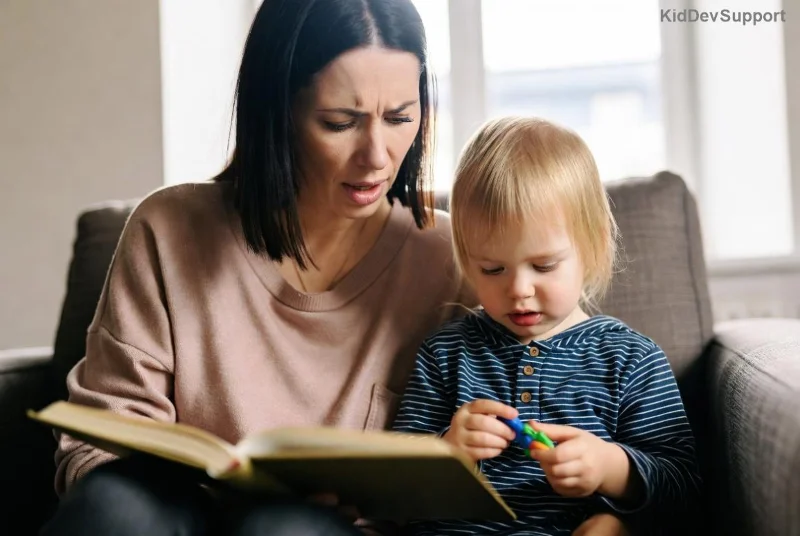
2. Picture Book Power Hour
Read interactive books daily. Point and name: "Big elephant trumpets!" Ask "Where's the dog?" to prompt responses. Flip through 10-15 pages; repetition is gold.
3. Mealtime Mimicry
During snacks, label foods: "Yummy banana—say 'ba-na-na'!" Echo their attempts. Turns eating into toddler speech activities.
4. Mirror Talk Time
Face the mirror together. "Eyes, nose, mouth!" Make faces, copy sounds. Builds self-awareness and articulation. 5 minutes post-bath works wonders.
![Toddler reading book with parent to boost speech]()
5. Toy Narratives
With blocks or dolls, create stories: "Dolly eats apple. Yum!" Encourage "My turn!" Play-acting expands sentences effortlessly.
6. Outdoor Echo Games
Park walks? Name birds, cars, leaves. Play "I spy": "I spy something green!" Nature amps engagement.
7. Bath Bubble Babble
Splash and sound: "Pop! Bubble bursts." Water play loosens lips for clearer speech.
8. Song & Dance Parties
Action songs like "Head, Shoulders, Knees, and Toes" link words to movements. Dance daily for motor-speech sync.
9. Bedtime Recaps
Review the day: "We saw doggy! Woof woof!" Winds down while reinforcing vocab.
10. Tech-Free Calls
Video chat family: "Say hi Grandma!" Real voices beat screens for mimicry.
These daily speech exercises for toddlers are game-changers. Mix them up to keep it fresh—your toddler will crave more!
Your Perfect Daily Speech Stimulation Schedule (Table Guide)
Structure wins. Here's a customizable toddler speech routine:
| Time of Day |
Activity |
Goal |
Duration |
| Morning |
Sing rhymes |
Phonics & rhythm |
5 mins |
| Mid-morning |
Picture books |
Vocabulary |
10 mins |
| Lunch/Snack |
Label foods |
Naming & echoing |
5 mins |
| Afternoon Play |
Toy stories + outdoor |
Sentences & descriptions |
15 mins |
| Evening |
Mirror + bedtime recap |
Articulation & review |
10 mins |
Tweak for your routine. Track progress weekly—celebrate wins! 🎉
![Family playing speech games with toddler]()
Red Flags & When to Get Help for Speech Delays
Most delays resolve with daily stimulation, but watch for:
- No words by 18 months.
- Limited eye contact or gestures.
- Frustration without trying to communicate.
Consult a pediatrician or speech therapist early. For resources, check the American Speech-Language-Hearing Association (ASHA)—latest screening tools available.
Bonus Tips: Maximize Results & Avoid Pitfalls
Do: Get face-to-face, use short/simple words, praise efforts ("Great try!").
Avoid: Screens under 18 months, correcting harshly, overwhelming with questions.
Patience pays—results compound over weeks. Imagine your toddler confidently storytelling. You're their best coach!
Ready to Spark Chatter? Your Action Plan
Pick 3 activities today. Journal progress. Share in comments—what's your go-to toddler speech activity? For more, subscribe for weekly tips. Your toddler's voice awaits—start now and watch the magic unfold! 🚀