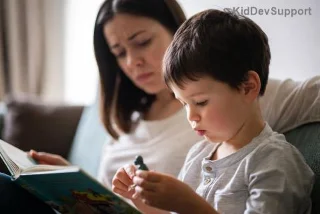
Is your child struggling with speech delay? You're not alone. Many parents face this challenge, but there's a joyful, natural solution: music and singing. Recent studies highlight how rhythmic sounds and melodies can accelerate language development, making it an ideal tool for home-based intervention. This guide delivers actionable speech delay tips using music and singing, helping you foster communication skills step by step. Keep reading to transform playtime into progress! 😊
Understanding Speech Delay and Why Music Works
Speech delay occurs when a child doesn't meet typical milestones, like saying first words by 12 months or forming sentences by age 3. It affects up to 10% of young children and can stem from hearing issues, oral-motor challenges, or developmental factors.
The magic of music and singing for speech delay lies in neuroscience. Melodies engage the brain's auditory, motor, and emotional centers simultaneously. Singing exaggerates sounds, slows speech tempo, and pairs words with gestures—perfect for little learners. The latest research from speech-language pathology experts confirms that musical activities improve phonemic awareness, vocabulary, and articulation more effectively than rote drills.
Key Benefits of Music Therapy for Speech Delay
- Boosts Imitation Skills: Children mimic pitches and rhythms before words.
- Enhances Pronunciation: Vowels and consonants emerge naturally through songs.
- Builds Confidence: Fun sessions reduce frustration, encouraging verbal attempts.
- Improves Listening: Repetitive lyrics sharpen focus on speech sounds.
These benefits are backed by ongoing clinical trials showing measurable gains in expressive language after consistent musical play.
Practical Speech Delay Tips: How to Use Music and Singing at Home
Start simple—no musical talent required! Here's a structured approach:
- Daily Sing-Alongs (10-15 Minutes): Choose familiar tunes. Exaggerate mouth movements and pauses for clarity.
- Incorporate Gestures: Pair lyrics with actions, like clapping for "If You're Happy and You Know It."
- Use Props: Shakers or scarves add sensory input, holding attention longer.
- Record and Replay: Play back your child's attempts to build self-awareness.
Pro Tip: Focus on high-contrast songs with repetitive phrases. Track progress weekly—note new sounds or words emerging.
Fun Singing Activities for Speech Delay with a Ready-to-Use Table
Here's a curated table of age-appropriate songs and activities tailored for music and singing for speech delay. Adapt for 1-5-year-olds:
| Song Title |
Target Skills |
Activity Twist |
| Twinkle Twinkle Little Star |
Vowel sounds (/i/, /a/) |
Use fingers as stars; point to mouth for each word. |
| Old MacDonald Had a Farm |
Animal sounds & rhythm |
Mimic farm noises with exaggerated faces. |
| Head, Shoulders, Knees and Toes |
Body vocabulary & sequencing |
Slow down, touch body parts while naming. |
| Row Row Row Your Boat |
Rhyming & round-robin singing |
Pass a toy boat; take turns leading lines. |
| Baby Shark |
Consonants (/d/, /sh/) |
Hand gestures for family members; repeat doo-doos. |
Rotate these weekly for variety. Parents report first words appearing after 2-4 weeks of daily use!
Advanced Music and Singing Tips for Lasting Results
To maximize impact:
- Personalize Lyrics: Insert your child's name, e.g., "[Child's Name] claps his hands!"
- Layer with Visuals: Use picture books or apps with lyrics.
- Group Sessions: Sibling or playgroup singing amplifies peer modeling.
- Instruments for Motor-Speech Link: Drums for plosives (/p/, /b/); whistles for /s/.
For evidence-based depth, explore resources from trusted organizations like the American Speech-Language-Hearing Association (ASHA).
![Family music session helping speech development]()
Common Mistakes to Avoid in Speech Delay Music Therapy
Don't rush—over-correction frustrates kids. Avoid background noise during sessions. If no progress after 1-2 months, consult a professional. Music complements, but doesn't replace, therapy.
When to Seek Professional Help Alongside Music and Singing
While music and singing for speech delay shines at home, red flags include no babbling by 12 months or regression. Speech therapists often integrate music—ask for a music therapy referral. Early intervention yields the best outcomes, per the latest pediatric guidelines.
Your Next Steps: Start Singing Today!
Ready to hear your child's voice bloom? Pick one song from the table, set a timer for 10 minutes daily, and celebrate every sound. Share your wins in the comments—what's your go-to tune? With these speech delay tips, you're equipping your child for confident communication. 🎶
Disclaimer: This guide is for informational purposes. Consult healthcare professionals for personalized advice.