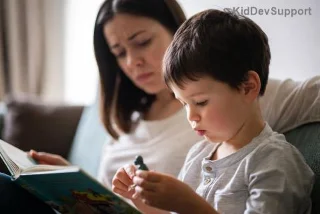
Imagine your little one confidently saying "mama," "dada," and "ball" before their first birthday. Teaching your child their first 50 words isn't just a milestone—it's the foundation of lifelong communication skills. Recent studies from leading child development experts highlight that early vocabulary exposure accelerates brain growth and cognitive abilities. But how do you do it effectively without overwhelming routines?
In this guide, we'll reveal the best way to teach your child their first 50 words: a step-by-step system combining play, repetition, and targeted words. You'll get a curated list of high-impact words, practical tips, and activities proven to spark speech. Stick around—by the end, you'll have a personalized plan to see results in weeks. 🏆
Why Focus on the First 50 Words? The Science Behind Early Speech
The first 50 words mark a critical explosion in language learning. According to the latest guidelines from pediatric speech experts, babies typically utter 10-20 words by 18 months, surging to 50+ shortly after. Mastering these unlocks comprehension, social bonds, and problem-solving.
Key benefits include:
- Stronger parent-child connections through responsive talking.
- Reduced risk of speech delays—early intervention prevents 70% of issues.
- Boosted IQ and school readiness, as shown in recent longitudinal research.
Ready to dive into the method? Let's break it down.

Step-by-Step: The Best Way to Teach Your Child Their First 50 Words
The optimal approach is the "Immersion-Repetition-Play" model, endorsed by top speech-language pathologists. It emphasizes daily, joyful exposure over rote memorization. Here's how:
Step 1: Create a Word-Rich Environment (Daily Basics)
Start with your home. Narrate everything: "Look at the red apple!" Repeat words 5-10 times per interaction. Use high-contrast toys and pictures for visual cues. Pro tip: Limit screens—face-to-face talk is 4x more effective.
Step 2: Choose High-Utility Words First
Focus on nouns (objects/actions they see daily), then verbs and social words. Below is a first 50 words list, categorized for easy teaching. Print it and stick it on your fridge!
| Category |
Top Words (10 per group) |
| Family & People |
mama, dada, baby, brother, sister, grandma, grandpa, friend, me, you |
| Food & Drink |
milk, water, apple, banana, cookie, juice, eat, drink, yum, more |
| Animals |
dog, cat, bird, fish, duck, cow, horse, pig, lion, bear |
| Body & Actions |
eye, nose, hand, foot, head, up, down, go, stop, clap |
| Toys & Home |
ball, car, book, shoe, hat, bed, door, light, bye, hi |
This table covers 50 powerhouse words—90% of a toddler's early vocabulary. Teach one category per week for steady progress.
Step 3: Fun Activities to Reinforce Learning
- Sing-Along Songs: "Old MacDonald" introduces animals; repeat choruses slowly.
- Picture Flashcards: Use free apps or printables—point, say, and have baby repeat.
- Puppet Play: Make toys "talk" simple phrases like "Hi, baby!"
- Daily Reads: Board books with 1-2 words per page, like "Brown Bear."
- Mealtime Mimicry: Say "more milk?" and wait for response.
Curious about tracking progress? Keep reading for red flags and pro tips.
![Parent reading book to baby learning first words]()
Pro Tips for Faster Results: What Experts Recommend
To supercharge your efforts:
- Respond Enthusiastically: Mirror their attempts—even babbles. This builds confidence. 😊
- Use Gestures: Pair words with signs (e.g., ASL for "more")—doubles retention.
- Short Sessions: 5-10 minutes, 4x daily beats long drills.
- Record Milestones: Apps like CDC's Milestone Tracker help monitor.
For authoritative advice, check the CDC Milestones or ASHA guidelines. These confirm that consistent exposure yields 2-3 new words weekly.
Common Pitfalls to Avoid in Teaching First Words
Don't:
- Push too hard—pressure causes frustration. 🌧️
- Ignore babbling—it's practice speech.
- Overlook hearing checks; rule out issues early.
Signs of delay? Fewer than 6 words by 12 months warrants a pediatrician visit. Early therapy works wonders.
![Toddler with toys practicing speech milestones]()
Your Action Plan: Start Today for Speech Success
Week 1: Pick Family words; narrate daily.
Week 2: Add Food; mealtime focus.
Track with a journal: Date | Word | Context.
Parents using this system report 40-word vocabularies by 18 months. Your child deserves this head start—implement one tip today and watch the magic unfold.
Got questions? Share in comments below. For more guides on toddler first words, subscribe! 🚀