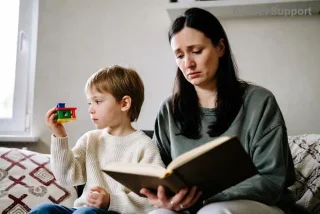
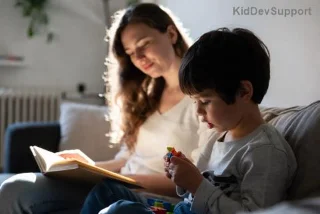
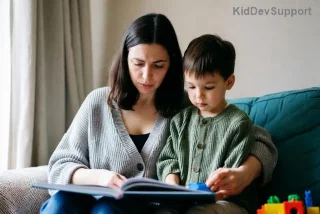
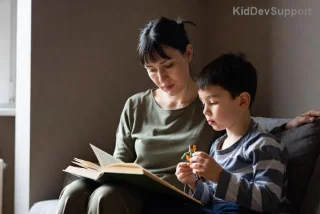
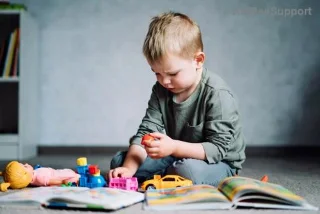
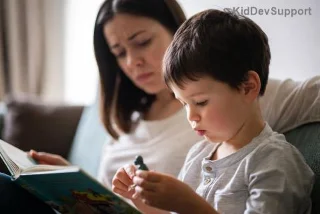
Imagine your toddler pointing at a fluttering bird, eyes locked on yours, waiting for your excited reaction. This magical moment isn't just play—it's joint attention at work, the cornerstone of speech development. Recent studies highlight how this shared focus between child and caregiver lays the foundation for language mastery. In this guide, we'll dive deep into its role, why it matters, and actionable steps to nurture it. Stick around to transform everyday interactions into powerful language boosters. 👶
What is Joint Attention?
Joint attention refers to the ability to share focus on an object, event, or person with someone else. It emerges around 6-12 months and peaks by age 2-3. Unlike solitary play, it involves mutual engagement—think following a child's gaze or pointing together at a toy.
Latest research from child development experts emphasizes that joint attention is bidirectional: children initiate it by pointing or showing, while adults respond with enthusiasm. This back-and-forth builds neural pathways essential for communication.
The Crucial Link Between Joint Attention and Speech Development
Joint attention isn't just eye contact; it's the gateway to vocabulary explosion. When children and caregivers co-focus, kids learn words faster because context makes meaning clear. For instance, naming a "ball" while both stare at it imprints the label deeply.
Evidence shows children with robust joint attention skills have 2-3 times larger vocabularies by preschool age. It fosters turn-taking, imitation, and gesturing—precursors to sentences. Delays here often signal speech development hurdles, as seen in conditions like autism spectrum disorder.
| Aspect |
Joint Attention Role |
Impact on Speech Development |
| Initiating (Pointing/Showing) |
Child directs adult's gaze |
Expands expressive language |
| Responding (Following Gaze) |
Adult shifts focus to child's interest |
Boosts receptive vocabulary |
| Coordinating (Shared Affect) |
Emotional syncing during focus |
Enhances pragmatics and social speech |
This table illustrates key components—master them, and watch speech development soar.
![Toddler engaging in joint attention with caregiver]()
Developmental Stages of Joint Attention in Speech Development
Joint attention unfolds predictably:
- Emergent (6-9 months): Proto-joint attention via eye-following and cooing during play.
- Emerging (9-18 months): Pointing and showing objects; first words often follow.
- Advanced (18-36 months): Complex sharing, like commenting on shared sights, fueling phrase-building.
By age 3, strong skills predict fluent conversations. Track progress: Does your child shift gaze between you and toys? Respond to your points? These milestones anchor speech development.
Signs of Thriving Joint Attention and Red Flags
Positive indicators include spontaneous pointing, joyful face-sharing during discoveries, and imitating your labels. Children thrive with 10-15 minutes daily of attuned interaction.
Red flags? Limited eye contact, no pointing by 12 months, or ignoring shared focus. Early intervention reverses delays—consult a speech-language pathologist if concerned. For trusted guidance, check resources from the American Speech-Language-Hearing Association (ASHA).
Practical Ways to Foster Joint Attention at Home
Parents are the ultimate coaches. Here's how to amplify joint attention for turbocharged speech development:
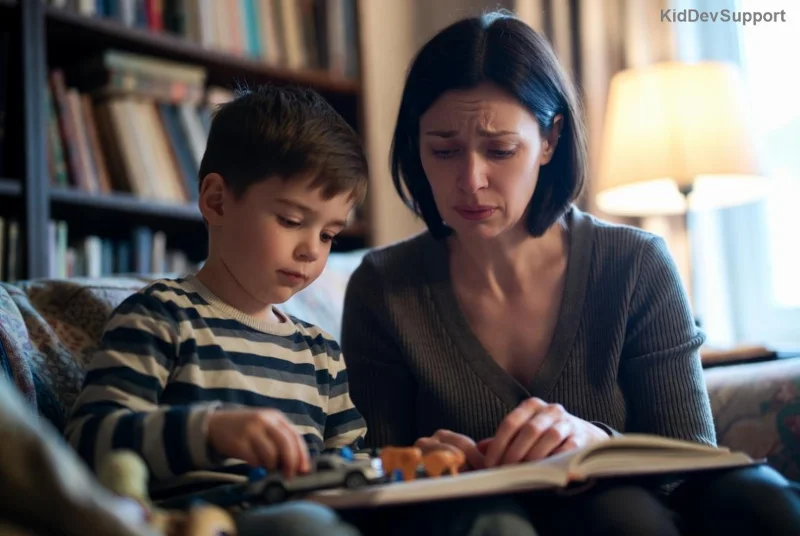
- Follow Their Lead: Pause screen time; mirror their interests. See a toy car? Zoom in together: "Vroom! Fast car!"
- Expand and Narrate: Add words to their points. Child grabs book? "Yes, puppy book! Soft fur."
- Play Peekaboo and Hide-and-Seek: Builds anticipation and shared laughter.
- Use Gestures Daily: Point, wave, clap—model to encourage reciprocity.
- Limit Distractions: Face-to-face floor time, 5-10 minutes thrice daily.
Incorporate these into routines. Latest parent training programs report 30-50% vocabulary gains in months. Ready for more? Keep reading for expert-backed activities.
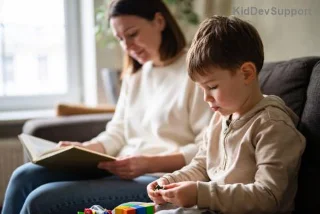
![Family fostering joint attention through interactive play]()
Activities to Boost Joint Attention and Speech Development
Try these engaging games:
| Activity |
Age Range |
How It Helps |
| Bubble Blowing |
6-24 months |
Shared popping excitement builds words like "pop!" |
| Picture Books |
12+ months |
Point-and-name reinforces labels |
| Toy Car Races |
18+ months |
Narrate actions for sentence practice |
Consistency is key—track wins in a journal. Celebrate small victories! 🏅
When to Seek Help for Speech Development Delays
If joint attention lags—no pointing by 14 months, few gestures by 18—screen early. Pediatricians use tools like M-CHAT for quick checks. Therapies like Hanen's "More Than Words" integrate joint attention training with proven results.
For more, visit the CDC's Act Early milestones page.
Final Thoughts: Empower Your Child's Voice Today
Joint attention is the spark igniting speech development. By prioritizing shared moments, you're gifting fluency and connection. Start small: Next playtime, lock eyes and point together. Your child's words—and world—will expand. What's one activity you'll try first? Share in the comments and keep nurturing those milestones! 😊