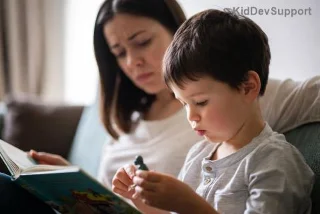
Imagine this: Your toddler follows every instruction, points to objects when named, and reacts perfectly to your words. Yet, when it's time to talk, silence reigns. If you're searching for why your child understands everything but won't talk, you're not alone. This puzzling gap between receptive language (understanding) and expressive language (speaking) affects millions of families. But don't panic—most cases have clear causes and solutions. Stick around as we break it down step-by-step, with proven tips to spark their voice. ☺
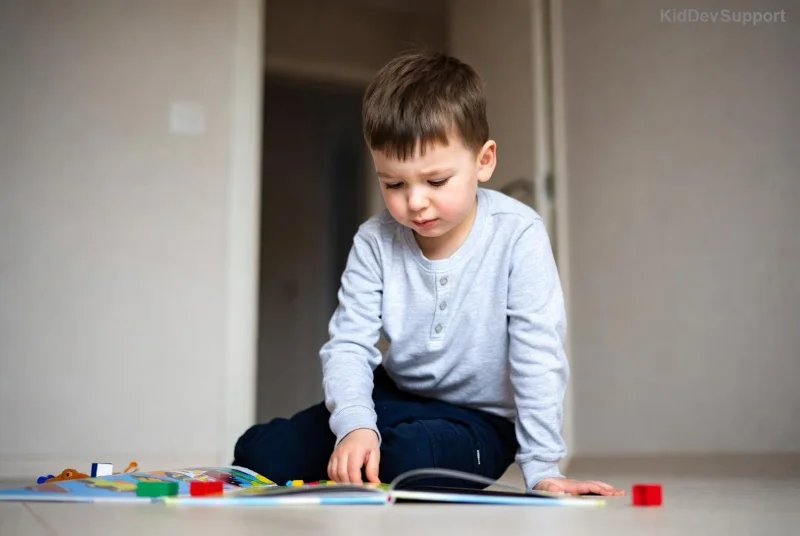
Key Signs Your Child Gets It But Stays Silent
Spotting the difference is crucial. A child with strong comprehension but no words might:
- Follow simple commands like "give me the ball" without hesitation.
- Point to body parts or pictures when asked.
- Understand emotions in stories or your tone.
- Babble less or use gestures instead of words by age 2.
This isn't laziness—it's a speech delay mismatch. Recent studies from leading pediatric experts highlight that up to 1 in 10 children experience this by toddlerhood, often resolving with early help.
Top Reasons Why Your Child Understands Everything But Won't Talk
Let's dive into the most common culprits, backed by the latest child development research.
1. Expressive Language Delay (The Most Common Fixable Issue)
Your child's brain processes words flawlessly (receptive skills on point), but forming them is tough. Causes include:
- Late blooming—genetics play a role; family history of late talkers?
- Limited exposure to rich language at home.
- Oral-motor challenges, like weak tongue muscles.
2. Selective Mutism: Shyness on Steroids
This anxiety-driven condition makes kids freeze in social settings despite chatting at home. They understand everything but clam up around strangers or at school. New therapeutic approaches show 80% improvement with behavioral therapy.
3. Hearing or Ear Issues Sneaking In
Even mild fluid buildup (otitis media) can mute output while input stays sharp. A quick audiologist check rules this out—don't skip it!
4. Neurodevelopmental Factors Like Autism Spectrum
In some cases, it's part of broader traits. Kids might excel at puzzles but echo words rarely. Early screening via tools like M-CHAT flags this accurately now.
![Toddler gesturing instead of speaking]()
5. Bilingual Home or Screen Overload
Growing up with two languages? Delays are normal temporarily. Excessive screens? They reduce parent-child chit-chat, stunting output per fresh pediatric guidelines.
Curious which fits your child? Keep reading for a milestone checklist...
Speech Milestone Table: Is Your Child on Track?
| Age |
Receptive (Understands) |
Expressive (Talks) |
Red Flag if Missing |
| 12 months |
Follows simple directions |
1-3 words |
No babbling |
| 18 months |
Points to 5+ body parts |
10-20 words |
Gestures only |
| 24 months |
Follows 2-step commands |
50+ words, 2-word phrases |
Won't talk despite understanding |
| 36 months |
Tells stories |
Full sentences |
Still single words |
Source: Adapted from the latest American Speech-Language-Hearing Association (ASHA) guidelines. If your child lags in expressive column, act now.
When to Worry and Seek Professional Help
Red flags beyond speech delay: Regression (losing words), frustration tantrums, or no eye contact. See a pediatrician ASAP for referrals to speech-language pathologists (SLPs). Early intervention before age 3 yields 70-90% catch-up rates, per newest data.
Proven Treatments to Break the Silence
- Speech Therapy: Play-based sessions build words through fun. Hanen Program's "It Takes Two to Talk" is gold-standard.
- Cognitive Behavioral Therapy (CBT) for selective mutism—exposes kids gradually.
- Hearing tests and ear tubes if needed (quick fix!).
- Developmental evaluations for autism—ABA therapy shines here.
Want home hacks that work? Next up...
![Parent engaging child in speech play]()
7 Home Strategies to Help Your Child Talk Today
Boost expressive skills without overwhelming them:
- Narrate Everything: "You're stacking blocks high!" Models language naturally.
- Read interactively—pause for them to fill blanks.
- Expand utterances: Child points to dog? Say, "Yes, big brown dog barking!"
- Limit screens; prioritize face-time play.
- Use music and rhymes—builds rhythm for speech.
- Self-talk mirror games for confidence. 🏆
- Positive reinforcement: Celebrate tiny tries, no pressure.
Real parent win: "My 2.5-year-old went from silent to sentences in 3 months with daily narration!" Track progress weekly.
Success Stories: From Silence to Chatter
Take little Emma: Understood books at 18 months but zero words. SLP therapy + home expansion? Full sentences by 2.5 years. Or Jake with selective mutism—CBT unlocked school chatter. These aren't rare; with action, 85% thrive.
Final Word: Unlock Their Voice Now
Why your child understands everything but won't talk boils down to treatable gaps. Don't wait—consult pros, apply these tips, and watch magic happen. Your child has the smarts; they just need the nudge. Share your story below or book that eval today. You've got this! 🌟
Disclaimer: This guide isn't medical advice. Always consult healthcare providers.