If your toddler isn't chatting away like their peers, you're not alone. Up to 15-20% of children are classified as late talkers, meaning they have limited spoken vocabulary by age 2 but normal cognitive and sensory abilities. Yet, swirling around these little ones are persistent myths about late talkers that can heighten parental anxiety. From fears of lifelong issues to misguided blame, these misconceptions delay proper support. In this article, we debunk the top speech delay myths with insights from the latest research, empowering you to make informed decisions. Stick around to discover actionable steps that can transform your child's communication journey.
Myth 1: All Late Talkers Have Autism or a Serious Disorder ⚕️
One of the most alarming myths about late talkers is that delayed speech automatically signals autism spectrum disorder (ASD) or other neurodevelopmental issues. While early screening is crucial, the facts paint a different picture.
Recent studies from leading speech-language organizations show that only about 20-30% of late talkers receive an ASD diagnosis later. The majority—around 70%—catch up without intervention by school age. Late talking toddlers often simply process language differently, with strong comprehension but slower production. Key differentiator? Social engagement. If your child points, gestures, and responds to their name, it's less likely ASD-related.
Don't let this myth paralyze you. Early evaluation by a speech-language pathologist (SLP) clarifies risks without jumping to conclusions. Curious about signs to watch? Keep reading for more debunked fears.
Myth 2: Late Talkers Are Less Intelligent
Another pervasive speech delay myth: children who talk late must have low IQ. This outdated notion stems from early 20th-century assumptions, ignoring modern evidence.
The latest longitudinal research tracks late talking children into adolescence, revealing average or above-average intelligence in most cases. For instance, specific language impairment (SLI) affects vocabulary but spares nonverbal IQ. Many late talkers, like Einstein or Darwin (historical anecdotes aside), excel cognitively—they just express it later.
Focus on holistic development: puzzles, pretend play, and reading aloud boost both IQ and speech. Busting this myth frees parents to nurture strengths rather than fret over labels.
Myth 3: Boys Are Always Late Talkers—It's Normal for Them
Gender stereotypes fuel this myth: "Boys talk later; girls are ahead." While boys do lag slightly—by about 3-6 months on average—the gap is small and doesn't excuse delays beyond norms.
Current data from pediatric cohorts indicates that extreme toddler speech delays in boys warrant the same attention as in girls. Both genders benefit equally from early intervention. Blaming biology overlooks environmental factors like bilingual homes or less verbal interaction.
Pro tip: Track milestones equally. Fewer than 50 words by 24 months? Seek advice, regardless of gender. Next up, we tackle the "wait-and-see" trap.
![Parent reading book to late talking toddler]()
Myth 4: Late Talker Issues Resolve on Their Own—No Help Needed
The "wait-and-see" approach is tempting but risky. This late talker myth claims most kids outgrow delays naturally, so why intervene?
Latest meta-analyses debunk this: without support, 40-50% of late talkers face persistent issues like reading struggles or social challenges by age 5. Early therapy—simple parent coaching or play-based sessions—doubles vocabulary growth rates. Programs like Hanen’s “It Takes Two to Talk” yield lasting gains.
Intervention isn't about "fixing" but accelerating. Imagine your child confidently joining playdates sooner. Ready for the screen time scapegoat?
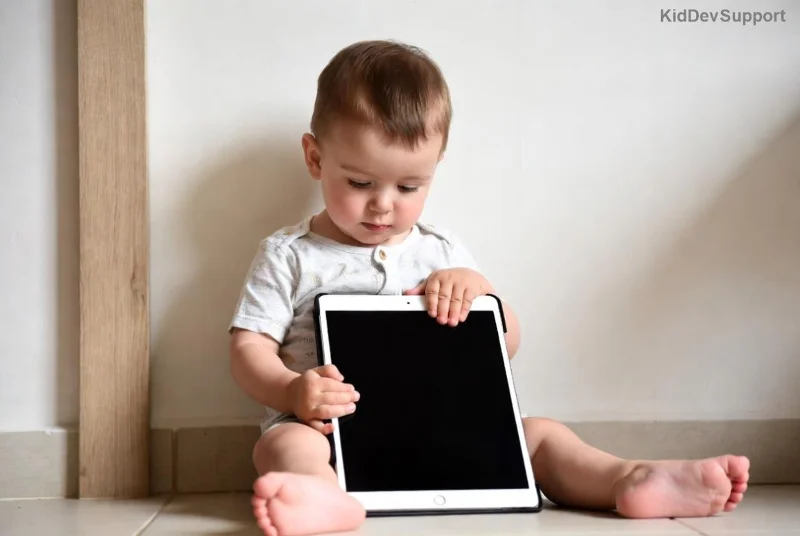
Myth 5: Too Much Screen Time Causes Speech Delays
With tablets everywhere, parents blame devices for late talking toddlers. Correlation? Yes. Causation? Not quite.
Recent guidelines from the American Academy of Pediatrics link excessive passive screen time (>2 hours/day under 2) to delays, but it's bidirectional: delayed kids get more screens for soothing. Quality matters—interactive apps or co-viewing can enhance learning.
Solution: AAP-recommended limits plus responsive talking during screen-free play. This myth highlights balance, not bans.
Myth 6: Bilingual Homes Make All Kids Late Talkers
Fear of "confusion" leads many bilingual families to drop a language. Yet, this speech delay myth is false.
Up-to-date research affirms bilingual late talkers catch up similarly to monolinguals, with cognitive perks like better executive function. Total language (across languages) matters more than per-language output.
Embrace it: narrate daily routines in both tongues. No need to choose—diversity strengthens brains.
| Myth |
Fact (Latest Research) |
| All late talkers have autism |
70% catch up naturally; screen for social cues |
| Late talkers are low IQ |
Normal/above-average cognition common |
| Boys always lag—wait it out |
Small gap; intervene if <50 words at 24mo |
| Delays self-resolve |
50% persist; early therapy prevents issues |
| Screens cause delays |
Excess passive use correlates; quality viewing helps |
| Bilingualism confuses kids |
Catch-up equal; bilingual advantages |
![Happy child communicating with family after speech progress]()
What to Do Next: Proven Steps for Late Talking Toddlers 🏆
Now that we've shattered these common myths about late talkers, action time. Monitor milestones: 50+ words and 2-word combos by 24 months. Consult your pediatrician for SLP referral—free early intervention awaits in many regions.
- Daily Boosters: Talk descriptively (e.g., "Big red ball bounces!"), expand utterances, reduce questions.
- Play Power: Turn-taking games build reciprocity.
- Tech Tools: Apps like Articulation Station for fun practice.
For reliable resources, check ASHA.org or CDC Milestones. Most late talkers thrive with support—your involvement is the game-changer. Share your story below; you've got this! 😊