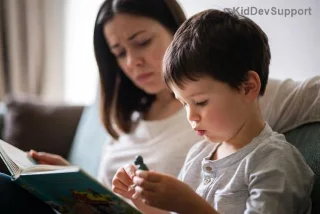
Is your 2-year-old who only says 5 words leaving you worried? You're not alone. Many parents notice their toddlers lagging in speech, but the good news is early intervention works wonders. According to the latest guidelines from leading pediatric experts, most 2-year-olds should have 50+ words and simple two-word phrases by now. A limited vocabulary like just five words signals a potential speech delay, but with targeted strategies, you can help your child catch up.
This guide dives straight into actionable steps on how to help a 2-year-old who only says 5 words. From daily routines to fun games, we'll cover what works based on evidence from speech-language pathologists (SLPs). Stick around—you'll discover simple changes that could transform babbling into full sentences. Let's get your little one talking!

Recognize the Signs: Is It Really a Speech Delay?
Before jumping into fixes, confirm if it's a true toddler speech delay. By age 2, children typically:
- Point to objects when named.
- Follow simple directions like "Get the ball."
- Use 50+ words (not just 5).
- Combine two words, e.g., "More milk."
If your child relies on just five words (like "mama," "no," "ball"), doesn't imitate sounds, or avoids eye contact during play, it's time to act. Bilingual homes or ear infections can mimic delays, but persistent issues need attention.
Speech Milestones for 2-Year-Olds (Latest Pediatric Guidelines)
| Age Milestone |
Expected Skills |
Red Flags (Seek Help If...) |
| 18-24 Months |
20-50 words; points to body parts |
Only 5 words; no pointing |
| 24 Months |
Two-word phrases; follows 2-step directions |
No imitation; frustration without words |
| 30 Months |
200+ words; names friends |
Stranger anxiety persists; unclear speech |
These benchmarks come from trusted sources like the American Speech-Language-Hearing Association (ASHA 🩺). Track progress weekly—what five words does your child use? Note new attempts to build from there.
Step 1: Consult a Professional Early 🩺
Don't wait—early speech therapy for toddlers yields the best results. Schedule a free screening through your pediatrician or Early Intervention services (available in most countries for kids under 3). SLPs assess hearing, oral motor skills, and autism risks.
Pro Tip: If no progress in 3 months of home strategies, professional help is non-negotiable. Studies show 70-80% of kids with mild delays catch up with therapy.
Step 2: Create a Speech-Rich Environment at Home
Turn everyday moments into boost toddler speech opportunities. Narrate everything: "Look, red apple! Yummy crunch!" Repeat your child's five words back expanded: If they say "ball," reply "Big red ball rolling!" This modeling technique, called expansions, builds vocabulary without pressure.
- Limit screens: No more than 1 hour/day; opt for interactive books instead.
- Face-to-face time: Get eye-level, exaggerate expressions.
- Daily routines: Label bath toys, meals, and bedtime.
Consistency is key—aim for 15 minutes of focused interaction, three times daily.
Step 3: Fun Games to Boost Toddler Vocabulary
Play trumps drills. These evidence-based activities spark speech:
- Peek-a-Boo Plus: Hide toys, say "Where's ball? Found it!" Encourages anticipation words.
- Song Time: Sing "Wheels on the Bus" with gestures—repetition aids memory.
- Picture Walks: Point and name in board books: "Soft doggy woof!"
- Bubble Blow: "More bubbles!" prompts requests.
- Imitation Chain: Clap, say "Clap hands!" Mirror back their tries.
Do one game daily. Watch frustration fade as words emerge—parents report 20+ new words in weeks!
![Happy toddler playing speech games]()
Step 4: Nutrition and Health Boosters for Speech
Toddler speech thrives on brain fuel. Ensure:
- Iron-rich foods: Spinach, fortified cereals—deficiency links to delays.
- Omega-3s: Salmon, walnuts for neural growth.
- Hearing checks: Fluid in ears muffles sounds; treat promptly.
Avoid sugar crashes that zap energy for talking. Hydrate with water—dehydration slows cognition.
Step 5: Pause and Wait—Give Them Space to Speak
Resist finishing sentences. Use the "wait time" technique: Ask "Want juice?" then pause 5-10 seconds. This builds confidence. No scolding for "baby talk"—praise all efforts: "Great job saying 'ball'! 🎉"
Step 6: Track Progress with a Simple Chart
Stay motivated:
Weekly Speech Tracker
| Week |
New Words |
Phrases Tried |
Notes |
| 1 |
List here |
e.g., "Big ball" |
More pointing! |
| 2 |
|
|
|
| 3 |
|
|
|
Share with your pediatrician for tailored advice.
Step 7: What Not to Do—Common Pitfalls
Avoid:
- Pushing too hard—leads to shutdown.
- Over-relying on devices like tablets.
- Ignoring sibling dynamics—ensure one-on-one time.
Your Path Forward: From 5 Words to Sentences
Helping a 2-year-old who only says 5 words starts today. Implement one step weekly, track wins, and celebrate small victories. Most kids blossom with these tools—imagine hearing "I love you, Mommy!" soon. 😊
Ready for more? Download free speech milestone checklists from CDC. Consult your doctor now, and share your progress in comments below. You've got this—your child's voice awaits!