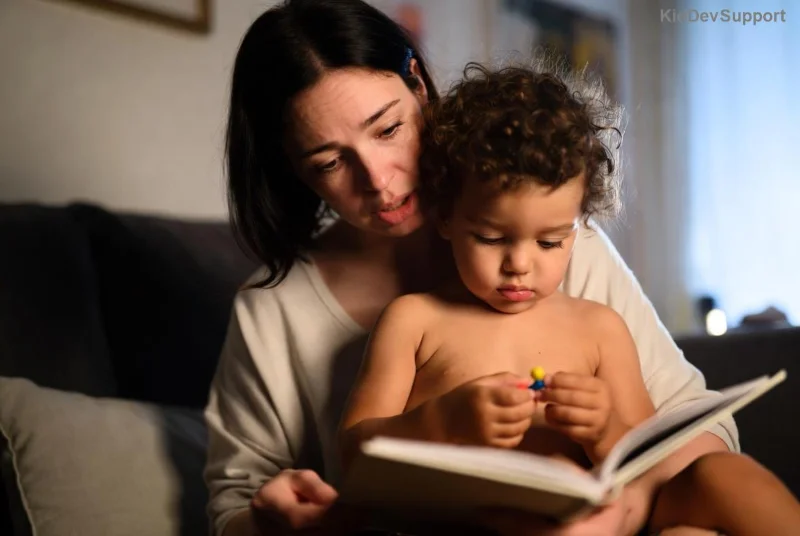
Imagine a child repeating your every word like an echo, yet struggling to express their own needs. Or picture another child confidently asking for a snack or sharing excitement. These scenarios highlight the stark contrast between echolalia and functional speech. For parents, educators, and therapists, distinguishing these speech patterns is crucial for early intervention and fostering true communication skills.
In this guide, we'll break down echolalia vs functional speech, exploring definitions, differences, causes, and actionable strategies. Whether you're navigating autism spectrum challenges or general speech delays, these insights empower you to support meaningful progress. Ready to decode these patterns? Let's dive in. ✅

What is Echolalia? Understanding Repetitive Speech Patterns
Echolalia is the automatic repetition of words, phrases, or sounds spoken by others. It's like a verbal echo, where the child mimics without fully grasping the meaning. This speech pattern often appears in neurodevelopmental conditions, particularly autism spectrum disorder (ASD), but can also occur in typical development during early language acquisition.
There are two main types:
- Immediate echolalia: Repeating something just heard, such as echoing a question right after it's asked.
- Delayed echolalia: Recalling and repeating phrases from TV shows, songs, or past conversations hours or days later.
While it might seem non-communicative, echolalia serves functions like self-regulation, processing language, or even attempting communication in a limited way. Recent research from leading speech pathology organizations emphasizes that up to 75% of children with ASD exhibit echolalia as a primary speech feature before developing more advanced skills.
What is Functional Speech? The Hallmark of Intentional Communication
In contrast, functional speech refers to language used purposefully to convey needs, wants, ideas, or emotions. It's the building block of social interaction—think "I want juice" instead of blindly repeating "Do you want juice?"
Key characteristics include:
- Novelty: Creating original sentences rather than rote repetition.
- Contextual relevance: Words match the situation, like requesting help during frustration.
- Social intent: Aimed at influencing others or sharing thoughts.
Functional speech emerges naturally in typical development around age 2-3, but delays can signal issues. Latest guidelines from speech-language experts highlight its role in cognitive and social growth, making it a milestone worth tracking.
![Therapist working on functional speech with child]()
Echolalia vs Functional Speech: A Side-by-Side Comparison
To clarify these speech patterns, here's a detailed comparison table. Use it as a quick reference for observation and progress tracking.
| Aspect |
Echolalia |
Functional Speech |
| Purpose |
Repetition for processing or self-soothing |
Express needs, share ideas, or interact |
| Originality |
Exact mimicry of heard phrases |
Novel combinations and spontaneous language |
| Context |
Often out-of-context or delayed |
Appropriate to situation and audience |
| Examples |
Parent: "Time for bed." Child: "Time for bed." (no intent to go to bed) |
Child: "I'm sleepy, bedtime now." |
| Prevalence |
Common in ASD, speech delays |
Goal in typical and therapeutic development |
This table underscores why transitioning from echolalia to functional speech is a pivotal goal in therapy. Spotting these differences early can lead to tailored support.
Causes and Contexts: Why Do These Speech Patterns Emerge?
Echolalia often stems from challenges in language processing, common in ASD, developmental delays, or even schizophrenia in rare cases. It acts as a "scaffold" for learning—children use familiar phrases to navigate uncertainty. Meanwhile, functional speech thrives in environments rich with responsive interactions.
Recent studies note environmental factors like limited verbal input or excessive screen time can exacerbate echolalia, while positive reinforcement accelerates functional speech. For deeper insights, consult resources from the American Speech-Language-Hearing Association (ASHA).
Diagnosis and Interventions: Bridging the Gap
Diagnosis involves speech-language pathologists (SLPs) observing patterns via tools like the ADOS-2 for autism-related speech. If echolalia dominates past age 3-4 without progress toward functional speech, professional evaluation is key.
Effective interventions include:
- Applied Behavior Analysis (ABA): Shapes echoes into functional responses.
- Speech Therapy Techniques: Scripting and fading to build spontaneity.
- Parent Training: Model functional language and expand on echolalic utterances (e.g., Child echoes "Want cookie?" → Parent: "Yes, you want cookie!").
Latest evidence-based approaches show 60-80% improvement in functional speech with consistent therapy. 🏆 Success stories abound when families commit early.
Practical Tips for Parents and Caregivers
Empower your child's journey from echolalia to functional speech with these steps:
- Observe daily: Track instances in a journal to share with SLPs.
- Respond purposefully: Acknowledge echoes and model expansions.
- Create opportunities: Use visuals, play-based activities, and reduce prompts.
- Monitor milestones: By age 5, most should show emerging functional speech.
- Seek multidisciplinary support: Combine SLP, OT, and behavioral experts.
These strategies not only address speech patterns but build confidence and connection. Wondering if your child is progressing? The next section reveals red flags and when to act.
Red Flags and When to Seek Help
Persistent echolalia beyond preschool years, lack of gestures, or no eye contact during "speech" warrants immediate SLP consultation. Early action prevents isolation and unlocks potential—don't wait for "natural" improvement.
For global benchmarks, refer to the CDC's developmental milestones. Remember, every child is unique, but data-driven support changes lives.
Conclusion: From Echoes to Expression
Mastering echolalia vs functional speech demystifies communication hurdles, paving the way for thriving interactions. By recognizing these speech patterns, implementing targeted strategies, and seeking expert guidance, you can guide your child toward expressive, functional language.
Stay proactive—start observing today and celebrate small wins. Your child's voice awaits. Share your experiences in the comments or consult a professional for personalized advice. 😊