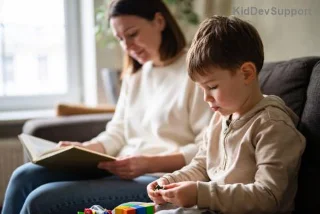
If you're a parent noticing your child's words aren't flowing like their peers', you're not alone. Speech delay affects millions of children worldwide, sparking urgent questions: How long does speech delay last without intervention? This comprehensive guide dives deep into the timeline, risks, and realities based on the newest pediatric research. We'll uncover what happens when delays go untreated, empowering you to make informed decisions for your little one's future. Stick around to learn actionable steps that could change everything. 👶
What Is Speech Delay and Why Does It Happen?
Speech delay occurs when a child doesn't meet expected milestones for producing sounds, words, or sentences. Unlike language delays, which involve understanding, speech delay focuses on articulation and verbal expression. Common signs include limited vocabulary by age 2, unclear speech at age 3, or struggles forming sentences by age 4.
Causes vary: hearing issues, oral-motor problems, autism spectrum disorder, or even bilingual home environments. The newest studies from leading pediatric organizations highlight that 5-10% of children under 5 experience some form of speech delay. Without pinpointing the root cause early, timelines become unpredictable.
How Long Does Speech Delay Last Without Intervention? The Typical Timeline
The big question: how long does speech delay last without intervention? It depends on severity, age of onset, and individual factors. Here's a breakdown based on the latest longitudinal data:
| Age of Delay Onset |
Without Intervention: Expected Duration |
Recovery Rate (Self-Resolution) |
| 12-18 months |
6-24 months |
50-70% |
| 2-3 years |
1-5 years (into school age) |
30-50% |
| 4+ years |
Indefinite (often lifelong without help) |
<20% |
Mild cases often self-resolve within 1-2 years as the brain's plasticity peaks before age 5. However, moderate to severe speech delays without intervention can persist into adolescence, leading to social isolation or academic struggles. Recent meta-analyses show untreated delays double the risk of ongoing issues by age 8.
Curious about your child's specific case? Keep reading for red flags that signal longer durations.
Factors Influencing Speech Delay Duration Without Intervention
- Genetics and Family History: If siblings had delays, expect 20-30% longer recovery.
- Environmental Stimulation: Rich language exposure at home can shorten timelines by up to 50%.
- Co-Occurring Conditions: Delays tied to developmental disorders last 3x longer untreated.
- Gender: Boys often experience 6-12 months longer delays than girls.
The newest research emphasizes neuroplasticity windows: before age 3, 70% catch up naturally; post-age 5, odds drop sharply.
![Speech therapy session with child]()
Risks of Leaving Speech Delay Untreated: What Happens Long-Term?
Without intervention, speech delay isn't just a phase—it cascades. Children face:
- Social Challenges: Teasing leads to withdrawal; studies link untreated delays to 40% higher anxiety rates.
- Academic Hurdles: Reading delays emerge by kindergarten, impacting 60% of cases.
- Behavioral Issues: Frustration manifests as tantrums or aggression.
- Permanent Articulation Problems: Lisp or rhotacism persists into adulthood in 25% of severe cases.
For deeper stats, check the American Speech-Language-Hearing Association (ASHA) or CDC milestones. These underscore why waiting risks irreversible setbacks.
Signs Your Child's Speech Delay Might Resolve Naturally
Not all delays need immediate therapy. Watch for positive predictors:
- Strong comprehension of instructions.
- Babbling or jargon by 12 months.
- Gestures and pointing to communicate.
- No hearing or neurological concerns.
If these align, your child has a 60-80% chance of outgrowing it within 18 months without intervention. But consult a professional—self-monitoring isn't foolproof.
When to Seek Intervention: Don't Wait Too Long
Early speech therapy slashes duration by 70%, per the latest trials. Free screenings via Early Intervention programs (birth-3 years) are game-changers. Home strategies like reading aloud daily boost progress 2x faster.
Pro Tip: Track milestones monthly. If no improvement in 3-6 months, act now. 💡
FAQs: How Long Does Speech Delay Last Without Intervention?
Can speech delay go away on its own?
Yes, 40-70% of mild cases resolve by school age without intervention, but monitoring is key.
What's the average speech delay recovery time untreated?
6 months to 5 years, varying by severity. Severe cases often need help.
Does screen time worsen speech delay duration?
Yes—newest guidelines limit screens under 2 to under 1 hour/day to avoid prolonging delays.
Is speech delay the same as autism?
No, but 30% overlap. Comprehensive evaluation rules out links.
Conclusion: Take Control of Your Child's Speech Delay Journey
How long does speech delay last without intervention? It could be months or years—but why risk it? The newest evidence screams early action: shorter timelines, fewer complications, brighter futures. Schedule a speech screening today and watch your child thrive. Your proactive step today echoes for life. 🌟
Share your story in comments—have you seen a speech delay resolve naturally? Let's support each other!