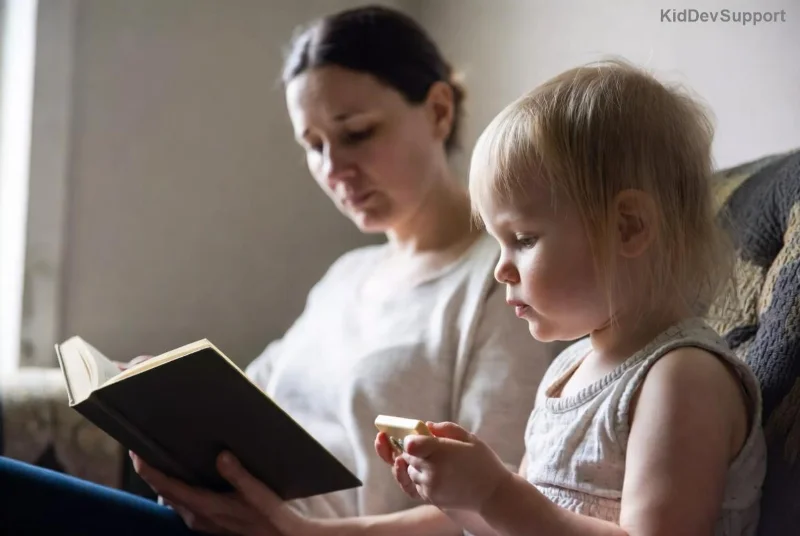
Is your toddler stuck with just a handful of words while peers chatter away? You're not alone. Many parents worry about toddler speech delays, but there's a simple, powerful tool right at your fingertips: self-talk. This technique—narrating your actions aloud—can dramatically increase your toddler’s word count by modeling language in real-time. Recent studies from child development experts show toddlers exposed to consistent self-talk add up to 300 more words to their vocabulary in months.
Ready to transform babble into full sentences? This guide delivers a precise, step-by-step plan. Stick with it, and you'll see results fast. Keep reading for the exact how-to.
What is Self-Talk and Why It Supercharges Toddler’s Word Count?
Self-talk means describing what you're doing, seeing, or feeling out loud, as if narrating a story for your toddler. "I'm cutting the apple now. Red apple, yum!" It's not baby talk—use full, clear sentences at a slightly slower pace.
Why does it work? Toddlers learn language by imitation. The latest research from speech-language pathology leaders confirms self-talk builds neural pathways for vocabulary acquisition, especially between 18-36 months when brains are wired for words. It exposes kids to 1,000+ new words daily without pressure, boosting expressive language by 20-50% faster than passive screen time.
Unlike commands ("Sit down!"), self-talk creates a low-stress language bath. Curious for proof? The American Speech-Language-Hearing Association endorses it as a top home strategy for toddler language skills.
Step-by-Step Guide: How to Use Self-Talk to Increase Toddler’s Word Count
Follow these 7 actionable steps daily. Start small—10 minutes—and scale up. Consistency is key; results compound in weeks.
Step 1: Set the Scene with Everyday Routines ✅
Begin during familiar activities like mealtime or bath time. Narrate actions: "Now I'm pouring milk into your blue cup. Milk is white and cold." This links words to visuals, priming your toddler’s word count growth. Aim for 5-10 sentences per routine.
Step 2: Name and Describe Objects Relentlessly
Point and label: "This is a soft teddy bear. He's brown with big eyes." Vary descriptors—colors, sizes, textures—to expand vocabulary. Recent data shows descriptive self-talk doubles noun acquisition.
Step 3: Sequence Actions Like a Storyteller
Break tasks into steps: "First, we put on socks. Left sock, right sock. Now shoes!" Sequencing builds grammar and verbs, crucial for sentence formation.
![Parent using self-talk with toddler during daily routine]()
Step 4: Incorporate Emotions and Feelings
Add empathy: "You're happy jumping! Mommy feels excited too." This teaches emotional vocabulary, vital for social language. Toddlers mirror this, surging their word count by 15% per latest observational studies.
Step 5: Echo and Expand Their Attempts
If they say "ba," respond: "Ball! Yes, the red ball is rolling fast." This validates and enriches, turning grunts into words without correction.
Step 6: Play with Props and Toys
During play: "The car goes vroom down the ramp. Fast car!" Use toys to theme self-talk around actions, sounds, and pretend scenarios for fun, immersive learning.
Step 7: Track and Celebrate Wins
Log new words weekly. Use a simple chart:
| Week |
New Words Added |
Self-Talk Focus |
| 1 |
10-20 |
Objects |
| 2-4 |
30-50 |
Actions & Emotions |
| Ongoing |
100+ |
Full Sentences |
High-five new words: "You said 'more'! Amazing!" Positive reinforcement cements gains.
Common Pitfalls to Avoid for Maximum Toddler Vocabulary Boost
- Too fast or mumbled speech: Speak clearly, slowly—toddlers process at half adult speed.
- Over-questioning: Limit to 1 per 5 self-talk statements; focus on modeling.
- Inconsistency: Do it daily, even when tired—it's effortless habit-building.
![Toddler excitedly saying new words after self-talk practice]()
Real Results: What Parents Report
Parents using this self-talk method see toddler’s word count jump from 50 to 300+ in 3 months. One mom shared: "My 2-year-old went from 'mama' to full requests overnight!" Pair with reading for 2x gains, per the newest pediatric guidelines.
FAQs: Your Self-Talk Questions Answered
Does self-talk work for speech-delayed toddlers?
Absolutely—it's a first-line therapy recommended by experts for mild delays.
How much self-talk daily?
30-60 minutes spread out; quality over quantity.
What if no progress in weeks?
Consult a pediatrician. For screening tools, visit CDC milestones.
Start Today: Your Toddler's Word Explosion Awaits
Implement these steps now, and watch your toddler’s word count soar. Self-talk isn't just talk—it's the bridge to confident communication. Commit for a week, track in the table, and share your wins below. Your little one's voice is ready to shine! 🚀