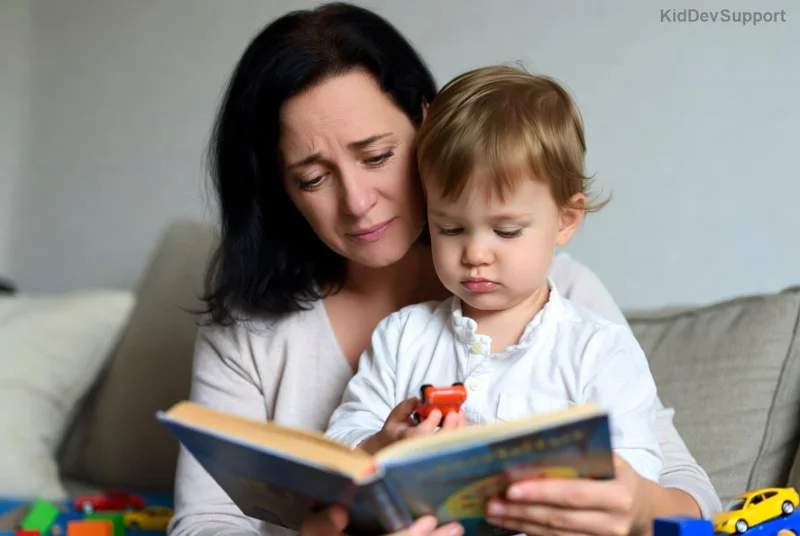
Is your toddler's world of words unfolding slowly? You're not alone. Many parents notice speech delays in young children, especially those on the autism spectrum. Enter the Early Start Denver Model (ESDM) 🩺—a game-changing, play-based intervention that's transforming how toddlers build language skills. This comprehensive approach integrates natural play with targeted teaching to spark communication breakthroughs. In this guide, we'll dive into what ESDM is, how it uniquely boosts toddler language development, and practical steps to get started. Stick around to uncover real results and tips that keep kids engaged and talking.

What is the Early Start Denver Model (ESDM)?
The Early Start Denver Model (ESDM) is an evidence-based therapy designed for children aged 12 to 48 months, particularly those with autism spectrum disorder (ASD). Unlike rigid therapies, ESDM blends principles of Applied Behavior Analysis (ABA) with developmental science, making learning feel like fun playtime. Developed by experts in child development, it targets core areas like social interaction, cognition, and—crucially—language development.
At its heart, ESDM follows the child's lead. Therapists and parents observe a toddler's interests (toys, bubbles, peek-a-boo) and weave in teaching moments. This naturalistic style ensures sessions are joyful, not drill-like, fostering motivation and retention. Recent studies highlight ESDM's edge: it accelerates gains in expressive and receptive language compared to standard interventions.
How ESDM Specifically Boosts Toddler Language Development
ESDM turbocharges language skills through seven key mechanisms, all embedded in everyday play:
- Joint Attention: Toddlers learn to share focus on objects or events, a foundation for words. Example: Pointing at a ball together prompts "ball!"
- Imitation: Mirroring actions builds vocabulary. Clap hands? Child claps and says "clap."
- Turn-Taking: Games like rolling a ball teach conversational rhythm, essential for back-and-forth talk.
- Functional Communication: Words gain meaning when linked to needs, like requesting "more" during snack time.
- Social Motivation: Play partners (therapists or parents) make interaction rewarding, encouraging verbal bids.
- Sensory-Motor Integration: Physical play enhances oral-motor skills for clearer speech.
- Generalization: Skills transfer from therapy to home, school, and beyond.
These elements create a snowball effect: early gestures evolve into words, sentences, and conversations. Newest research shows toddlers in ESDM programs gain up to 17 words per month—far outpacing peers in traditional therapies.
| Language Milestone |
ESDM Boost |
Typical Delay Without Intervention |
| First Words (12-18 months) |
Accelerated via play prompts ⭐ |
Often delayed 6+ months |
| Two-Word Phrases (24 months) |
Built through turn-taking |
Sparse or absent |
| 50+ Word Vocabulary (30 months) |
Rapid expansion in natural settings |
Limited to gestures |
![Toddler therapist using ESDM techniques during play session]()
Proven Benefits: Real Results from ESDM for Speech Delays
The power of ESDM shines in rigorous trials. Children receiving 20+ hours weekly show significant IQ gains, reduced autism symptoms, and—most excitingly—explosive language growth. One landmark study found 48% of ESDM participants achieved normal language levels, versus 18% in controls.
For non-ASD toddlers with delays, ESDM principles adapt seamlessly, promoting bilingual or late-bloomer speech surges. Parents report happier kids who initiate chats, ask questions, and narrate play—milestones that build confidence and bonds. UC Davis MIND Institute research confirms these outcomes persist long-term.
Implementing ESDM at Home: Parent-Friendly Tips
No clinic? No problem. ESDM empowers parents as co-therapists. Here's how to infuse it daily:
- Follow the Child's Lead: Join their play without directing. If stacking blocks, narrate: "Up goes the red block!"
- Use Natural Reinforcers: Reward words with the item desired, like handing juice after "juice."
- Incorporate Routines: Mealtime? Practice "spoon" or "yum." Bath? "Bubble pop!"
- Expand Language: Echo and add. Child says "dog"? Respond, "Yes, big brown dog runs!"
- Track Progress: Note new words weekly for motivation.
Certified ESDM training (available online) equips you further. Combine with speech therapy for synergy. Curious? Imagine your toddler's first full sentence—ESDM makes it possible.
![Parent and toddler practicing ESDM language activities at home]()
Who Benefits Most and When to Start ESDM?
Ideal for toddlers showing speech delays: fewer than 50 words by 24 months, no phrases by 30 months, or ASD red flags like poor eye contact. The earlier, the better—starting at 12 months yields the biggest leaps. Consult a developmental pediatrician for assessment.
Insurance often covers ESDM as early intervention. Find providers via Autism Speaks directories.
Ready to Spark Your Toddler's Voice?
The Early Start Denver Model (ESDM) isn't just therapy—it's a pathway to chatter-filled days and connected hearts. By harnessing play's magic, it delivers measurable language boosts that last a lifetime. Don't wait for words to appear; ignite them with ESDM. Consult a specialist today and watch your little one blossom. What's one play idea you'll try first? Share in the comments! 🚀