Is your little one struggling to find their words? Speech delay affects millions of children, but catching it early can transform their path to school readiness. This guide delivers actionable early tips backed by the newest pediatric research, helping parents foster communication skills that pave the way for kindergarten success. Stay tuned for milestones, home strategies, and when to act – empowering your child to speak up and shine.
What Exactly is Speech Delay?
Speech delay occurs when a child doesn't meet expected language milestones, lagging in producing sounds, words, or sentences. Unlike temporary babbling phases, it signals potential hurdles in expressive or receptive language. The newest studies from leading health organizations highlight that up to 10-15% of toddlers experience this, often linked to factors like hearing issues, bilingual homes, or developmental variations.
Early detection is key: receptive delay (understanding) and expressive delay (speaking) require different approaches, but both impact learning. Imagine your child entering school frustrated, unable to follow instructions or join peers – that's the risk without intervention.
How Speech Delay Impacts School Readiness
School readiness encompasses social, emotional, cognitive, and communication skills for kindergarten success. Children with untreated speech delay face challenges like difficulty following directions, low self-esteem, and isolation during playtime. Recent data shows they may struggle with literacy basics, affecting reading readiness by 20-30% more than peers.
But here's the good news: targeted early tips bridge this gap. Strong speech skills build confidence, enabling kids to ask questions, share ideas, and collaborate – core to thriving in class.

Key Signs of Speech Delay and Developmental Milestones
Spotting speech delay early prevents bigger issues. Use this table of newest-recommended milestones from pediatric experts to track progress:
| Age |
Milestone |
Red Flags for Speech Delay |
| 6-12 months |
Babbling, first words like "mama" |
No babbling or gestures by 12 months |
| 18 months |
10-20 words, points to objects |
Fewer than 6 words |
| 2 years |
50+ words, 2-word phrases |
No 2-word combos, unclear speech |
| 3 years |
Full sentences, clear speech |
Strangers can't understand 75% of speech |
| 4-5 years |
Stories, rhymes, ready for school |
Persistent errors, frustration in talking |
If your child shows red flags, don't wait – early action boosts outcomes dramatically.
Why Early Intervention is a Game-Changer for School Readiness
The newest research emphasizes that intervention before age 3 yields 70-80% improvement rates. Speech-language pathologists (SLPs) use play-based therapy to accelerate growth, directly enhancing school readiness. Programs like those from public health services offer free screenings, turning potential delays into strengths.
Top Early Tips to Combat Speech Delay at Home
Parents are the first teachers. Implement these evidence-based early tips daily:
- Read Aloud Daily: Choose interactive books with rhymes. Point to pictures and ask, "What's this?" – builds vocabulary by 1.4 million words by kindergarten.
- Narrate Everything: Describe actions: "We're stirring the pot – round and round!" Mimics natural language immersion.
- Limit Screen Time: Under 18 months, zero passive screens. Opt for co-viewing with discussion to avoid setbacks.
- Sing and Rhyme: Songs like "Wheels on the Bus" strengthen sound awareness 👶.
- Expand Utterances: If they say "ball," reply "Big red ball!" – models growth without correction.
Track progress weekly to stay motivated. These tips integrate seamlessly into routines, fostering school readiness without overwhelm.
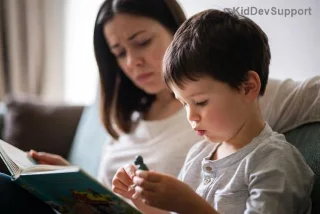
![Parent reading to child to overcome speech delay]()
Fun, Targeted Activities for Speech and School Readiness
Make learning playful:
- Puppet Play: Use toys to act out stories, encouraging your child to "speak" for characters.
- Picture Naming Games: Flashcards or apps prompt labeling, expanding from 20 to 200 words quickly.
- Turn-Taking Games: Simon Says or board games teach listening and responding – vital for classroom dynamics.
- Music Therapy at Home: Clap rhythms to improve articulation.
Combine with social playdates to practice real-world school readiness. Consistency is your superpower.
For professional guidance, consult resources like the American Speech-Language-Hearing Association (ASHA) – trusted for the latest tools.
When to Seek Help: Red Flags and Next Steps
Act if delays persist past milestones or accompany regression, ear infections, or family history. Schedule a pediatrician visit or free screening via early intervention programs. SLPs assess holistically, creating personalized plans that align speech gains with school readiness.
Early therapy isn't just words – it builds resilience, friendships, and academic foundations.
![Speech therapist helping child with school readiness skills]()
Integrating Speech Skills into Full School Readiness Prep
School readiness is holistic. Pair speech early tips with routines like fine motor practice (cutting, drawing) and emotional regulation (naming feelings). Mock "school days" simulate circle time, blending communication with structure.
| Speech Tip |
School Readiness Link |
| Daily reading |
Literacy foundation |
| Turn-taking |
Social skills |
| Narrating routines |
Following directions |
Your Path Forward: Start Today for Tomorrow's Success
Armed with these early tips, you're equipped to tackle speech delay and secure school readiness. Begin with one tip today – read a book together – and watch communication bloom. Your proactive steps ensure a confident, chatty kindergartener ready to conquer. If concerns linger, reach out to pros early. Share your progress in comments below – together, we unlock every voice! 🌟