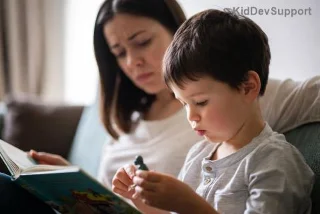
Have you noticed that many boys talk later than girls? It's a common observation among parents, but is it fact or fiction? In this article, we'll dive deep into the science behind speech delays in boys, debunk myths, and provide actionable insights to help your child thrive. Stick around to learn when to worry and how to encourage early talking—your questions answered ahead.

The Hard Facts: Do Boys Really Talk Later Than Girls?
Yes, it's a well-established fact that, on average, boys talk later than girls. Recent studies from leading pediatric organizations confirm that girls typically hit key language milestones ahead of boys by several months. For instance:
- Girls often say their first words around 12 months, while boys average 14-15 months.
- By age 2, girls form simple sentences more readily, with boys catching up by 2.5-3 years.
- This gap narrows significantly by school age, but the early difference is consistent across cultures.
These patterns aren't random. Child language development shows a clear gender trend, observed in large-scale data from millions of children worldwide. But why? Let's separate science from stereotypes.
Biological Reasons: Why Boys' Brains Develop Speech Differently
The root lies in biology. Boys' brains are wired slightly differently for language processing, influenced by genetics and hormones.
| Milestone |
Girls (Average) |
Boys (Average) |
| First Words |
10-12 months 🍼 |
12-15 months 🍼 |
| 2-Word Phrases |
18-24 months |
24-30 months |
| Full Sentences |
24-30 months |
30-36 months |
Testosterone plays a key role: higher levels in boys slow the growth of language centers in the brain, like Broca's and Wernicke's areas. Girls, with more estrogen, show faster neural connections for vocabulary and grammar. Recent neuroimaging confirms boys' language networks mature later, but they often excel in spatial skills early on.
Genetics amplify this—X chromosomes carry more language-related genes, giving girls a buffer against delays. No wonder speech delays in boys are 2-3 times more common.
Environmental and Social Factors: Beyond Biology
Biology isn't the whole story. Environment shapes why boys speak later:
- Socialization Differences: Girls are often encouraged to express emotions verbally from infancy, while boys get more physical play. This "boy code" delays verbal practice.
- Attention Spans: Boys' higher activity levels mean shorter focus on books or conversations early on.
- Screen Time and Play: Latest guidelines recommend limiting screens; boys are prone to more exposure, hindering language input.
A study by the American Speech-Language-Hearing Association (ASHA) links interactive play to faster milestones—girls naturally engage more in doll talk or storytelling.
![Parents encouraging child speech development]()
Myths Debunked: Fiction Surrounding Boys Talking Later
Not all claims hold water. Let's bust the biggest myths:
Myth 1: All Boys Are Late Talkers
Fiction. While averages favor girls, many boys babble early and chat fluently by 18 months. Individual variation trumps gender—premature birth or bilingual homes matter more.
Myth 2: Late Talking Means Autism or IQ Issues
Fiction. Most late talkers (80-90%) catch up without intervention. Only 10-20% have underlying issues like autism spectrum disorder (ASD), more common in boys but not causative.
Myth 3: It's Just Laziness—Push Harder
Fiction. Forcing speech backfires. Recent research emphasizes responsive parenting over drilling.
For reliable info, check CDC milestones or ASHA resources 🏥.
When to Worry: Red Flags for Speech Delays in Boys
Not every delay needs alarm, but watch for:
- No babbling by 12 months.
- Fewer than 50 words by 24 months.
- No two-word combos by 30 months.
- Loss of previously gained words 😟.
If concerned, consult a pediatrician early—interventions like speech therapy yield 70-80% success rates in the latest trials. Early action prevents long-term gaps.
Proven Tips: How to Help Boys Catch Up in Speech
Boost your boy's language with these evidence-based strategies:
- Read Daily: 15-20 minutes of interactive books builds vocabulary. Point and name objects.
- Narrate Everything: "Look, the ball is red!" turns routines into lessons.
- Limit Screens: Under 18 months, zero; after, quality only ⏱️.
- Play Therapy: Use toys for turn-taking talk—trains for "choo-choo-go!"
- Sing and Rhyme: Songs wire the brain for sounds.
Parents who model slow, clear speech see faster gains. Track progress with apps or journals for motivation.
Conclusion: Empowering Your Child's Voice
Boys talk later than girls—fact, not fiction—due to biology, environment, and subtle social cues. But with awareness and simple steps, most bridge the gap effortlessly. If your little one lags, you're not alone; early support leads to confident chatterboxes.
Ready to track milestones? Download a free chart from trusted sources and start today. Share your story below—what worked for your family? Your journey inspires others to read on and act. 🌟