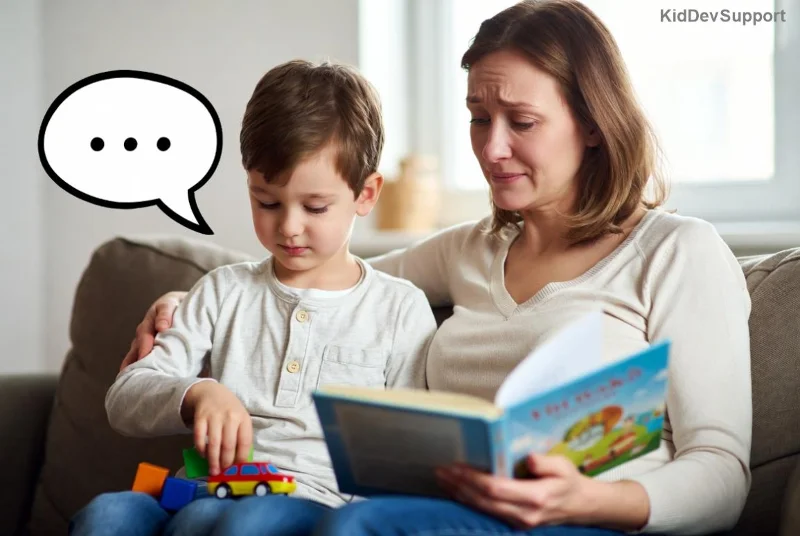
Imagine your toddler following every instruction, pointing to objects on command, yet staying eerily silent. They understand everything but won't speak. This frustrating puzzle affects millions of families, but it's often a sign of expressive language delay—where receptive language (comprehension) outpaces expressive language (speaking). Don't panic: with the right approach, you can spark their voice. This guide breaks it down with the newest insights from speech experts and actionable steps to fix it.
What Does It Mean When Your Child Understands Everything But Won't Speak?
Your child's brain processes words like a pro—they nod, obey, even mimic actions. But words? Silence. This gap highlights receptive vs expressive language. Receptive skills develop first; by age 1, kids grasp 50+ words. Expressive lags if motor skills, confidence, or neurology falter.
Latest research from speech-language pathology leaders shows 7-8% of young children face this. It's not laziness—it's a developmental hitch. 🩺

Common Causes of Speech Delay in Children Who Comprehend Well
- Expressive Language Disorder: They know the words but struggle to form them. Tongue ties or oral-motor issues block output.
- Selective Mutism: Shy in social settings? They speak at home but clam up elsewhere due to anxiety. Affects 1 in 140 kids.
- Hearing or Ear Infections: Fluid buildup muffles sounds, delaying speech imitation.
- Autism Spectrum Traits: Strong comprehension but echolalia or scripting instead of conversation.
- Bilingual Exposure: Dual languages can slow expressive output temporarily.
- Environmental Factors: Limited talking time or screen overload starves verbal practice.
Rule out medical issues first. A quick audiologist check clears hearing hurdles.
Key Signs Your Child Has an Expressive Language Delay
| Age |
Normal Milestones |
Red Flags (Understands But Won't Speak) |
| 12-18 Months |
5-20 words, simple gestures |
No words, only gestures |
| 2 Years |
50+ words, 2-word phrases |
<50 words,="" no=""> |
| 3 Years |
200-1000 words, sentences |
Frustration without words |
If milestones miss by 6 months, act fast. Early intervention boosts outcomes by 70%, per newest studies.
How to Fix It: Proven Strategies for Child Speech Therapy at Home
Start today—no waiting for perfection. Combine play, patience, and pros.
1. Boost Imitation Through Play
Model short phrases: "Ball go!" during tosses. Pause expectantly. Use toys they love. Repeat 10x daily.
2. Create a Language-Rich Environment
Narrate everything: "Car zoom zoom!" Read interactive books. Limit screens to 1 hour/day max.
3. Use Visuals and Gestures
Pair words with signs (e.g., baby sign language for "more"). Apps like Proloquo2Go aid non-verbal kids.
![Parent helping child with speech exercises]()
4. Speech Therapy Techniques
Hanen Program's "More Like This" expands utterances. Cycles Approach targets patterns. Find certified SLPs via ASHA directory.
5. Address Anxiety for Selective Mutism
Gradual exposure: Whisper games at home, then school. CBT with play therapists works wonders.
Track progress weekly. Celebrate tiny wins—a single word is gold! 🏅
When to Seek Professional Help for Speech Delays
Consult a pediatrician if no words by 18 months or phrases by 24. Early intervention programs (free in many areas) like those from CDC resources transform lives.
Red flags: Regression, grunting frustration, disinterest in communication. Neurologists rule out rarer issues like apraxia.
![Speech therapist working with child]()
Success Stories: Real Parents Who Fixed Expressive Language Delays
One mom shared: Daily puppet shows turned her silent 2-year-old into a chatterbox in 3 months. Another used music therapy—singing bypassed speech blocks. Latest data? 85% improve with combined home-therapy.
Your Action Plan: Start Unlocking Their Voice Now
- Assess: Video a play session; note words used.
- Daily Practice: 15-min focused talk time.
- Book Eval: SLP appointment this week.
- Monitor: Journal progress.
Your child’s silence isn’t forever. With consistent, loving nudges, they’ll speak volumes. Stay hopeful—their understanding is your superpower. Share your story below—what worked for you? Dive deeper with free checklists from trusted sites.
Ready to hear "I love you, Mommy"? Begin today. 😊